
























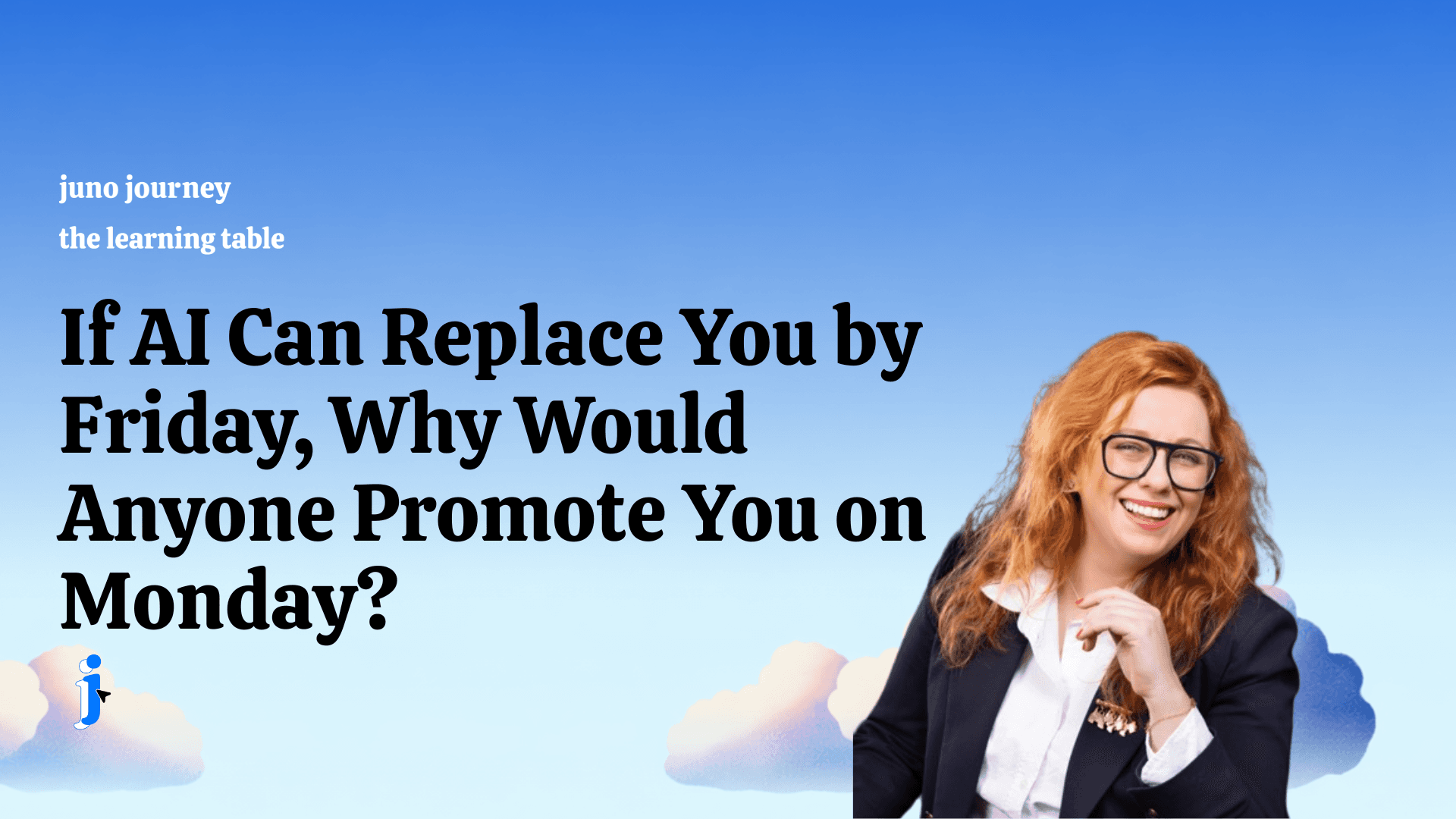
ICYMI: If AI Can Replace You by Friday, Why Would Anyone Promote You on Monday?
Jul 8, 2026 · 4 min read · By Klil Nevo
Challenge Accepted series
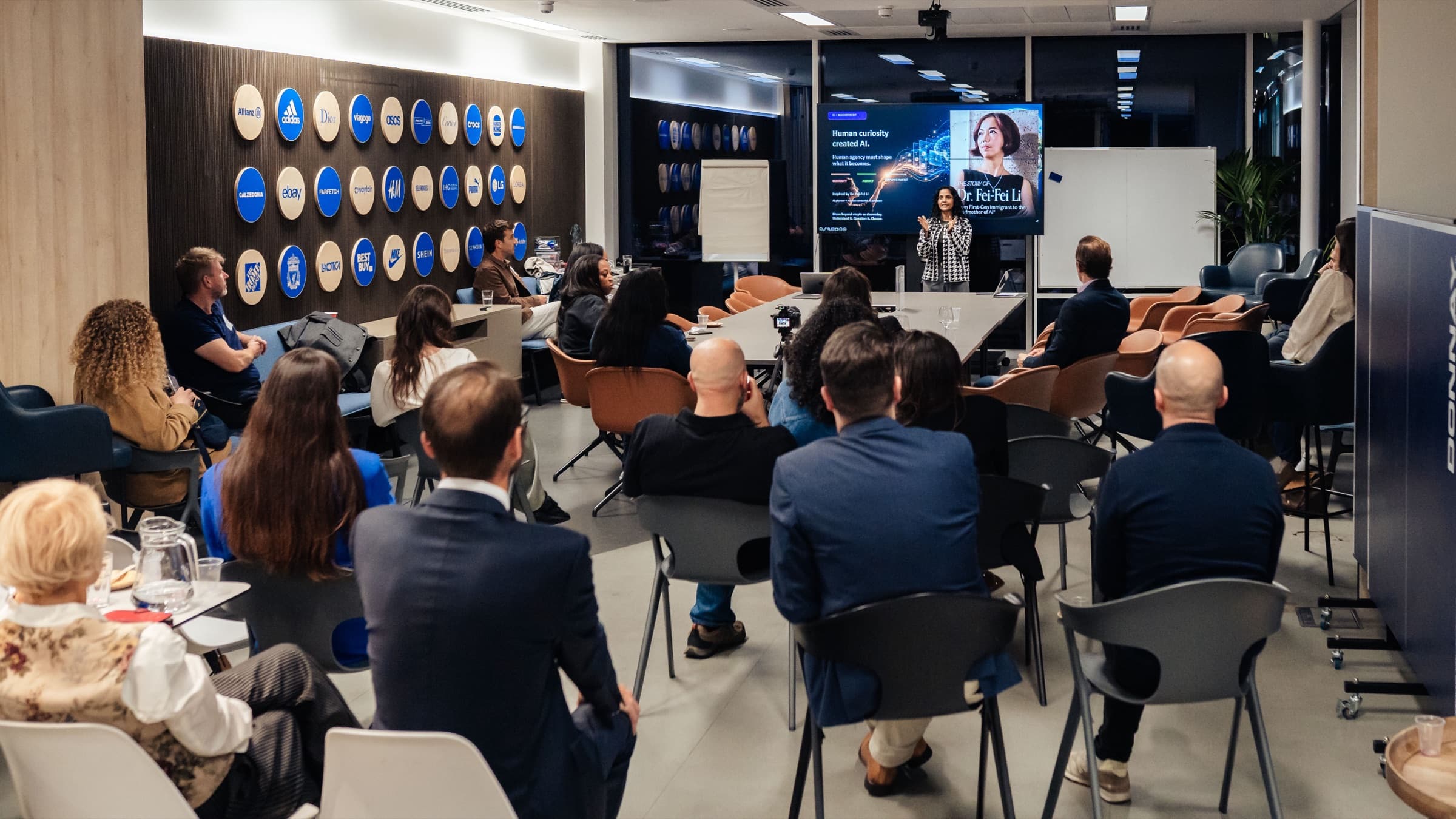
July 8thth, 2026 | Hosted by Klil Nevo: The Learning Table & Juno Journey
Expert: Alisa Reznik
AI isn't replacing the people who create value.
It's replacing the work that no longer requires them.
That was the central message from our latest Learning Table webinar with Alisa Reznik, Fractional COO and executive advisor, who challenged one of the biggest fears many professionals are quietly carrying today:
If AI can now do parts of my job faster than I can... what makes me valuable?
The answer wasn't "learn more AI tools."
It was: become the person AI can't replace.
Throughout the session, Alisa shared practical examples from leaders she has coached, showing that the people getting promoted today aren't necessarily the ones working harder. They're the ones making better decisions, influencing stakeholders, solving business problems, and making their impact visible.
AI isn't replacing people. It's changing what creates value.
For years, career growth has often rewarded execution. The people who delivered more projects, worked longer hours, and completed more tasks were seen as indispensable.
That equation is changing.
As AI becomes increasingly capable of handling repetitive work—reporting, summarizing, documentation, scheduling, drafting, and countless administrative tasks—the value of simply doing more is decreasing.
Instead, organizations are placing greater value on the work only humans can do:
- Making difficult decisions.
- Building alignment across teams.
- Influencing stakeholders.
- Coaching others.
- Solving ambiguous business challenges.
- Exercising judgment where there is no obvious answer.
As Alisa put it:
AI should execute. Humans should provide judgment.
Visibility matters more than productivity
One of the most memorable stories from the session was about an engineer who dramatically increased his productivity using AI.
His deployment time dropped from three weeks to one.
Yet he didn't get promoted.
Why?
Because leadership didn't see the business impact.
Together, they shifted the focus from completing technical work to communicating outcomes. Instead of talking about fixing bugs, he learned to explain how his work reduced customer drop-off, improved conversions, and supported business goals.
A few months later, he received both a promotion and a significant salary increase—not because he worked harder, but because leadership finally understood the value he created.
The lesson applies far beyond engineering.
Many HR, L&D, Talent, and Enablement professionals create enormous value every day, but unless that work is translated into business outcomes, much of it remains invisible.
Don't compete with AI. Use it.
One of the strongest messages from the webinar was that resisting AI is the wrong strategy.
Instead of asking:
"How do I protect my job from AI?"
Ask:
"How can AI remove the work that keeps me from doing my highest-value work?"
Alisa encouraged participants to audit everything they do during a typical week.
Tasks that are repetitive, administrative, or predictable should increasingly become AI-assisted.
The time saved should then be invested in work that creates leverage:
- Improving collaboration across teams.
- Driving strategic initiatives.
- Coaching colleagues.
- Building stronger executive relationships.
- Leading change.
That's where long-term career value is created.
Leadership isn't a title
Perhaps the biggest mindset shift from the session was this:
Leadership today is less about managing people and more about solving problems others avoid.
The professionals who will thrive over the next decade won't necessarily be the AI experts.
They'll be the people who know how to combine AI with human judgment, communicate clearly, connect business strategy to execution, and help others navigate change.
Those are skills technology doesn't replace.
Those are skills organizations actively promote.
Final thought
The AI conversation often focuses on replacement.
This session reframed it around opportunity.
AI may automate many of the tasks we've built our careers around.
But it also creates more space than ever for the uniquely human work that organizations need most.
The question isn't whether AI will change your role.
It's whether you'll use that change to become more valuable than ever before.