
























ICYMI: Career pathways people actually use
May 27, 2026 · 5 min read · By Klil Nevo
Challenge Accepted series
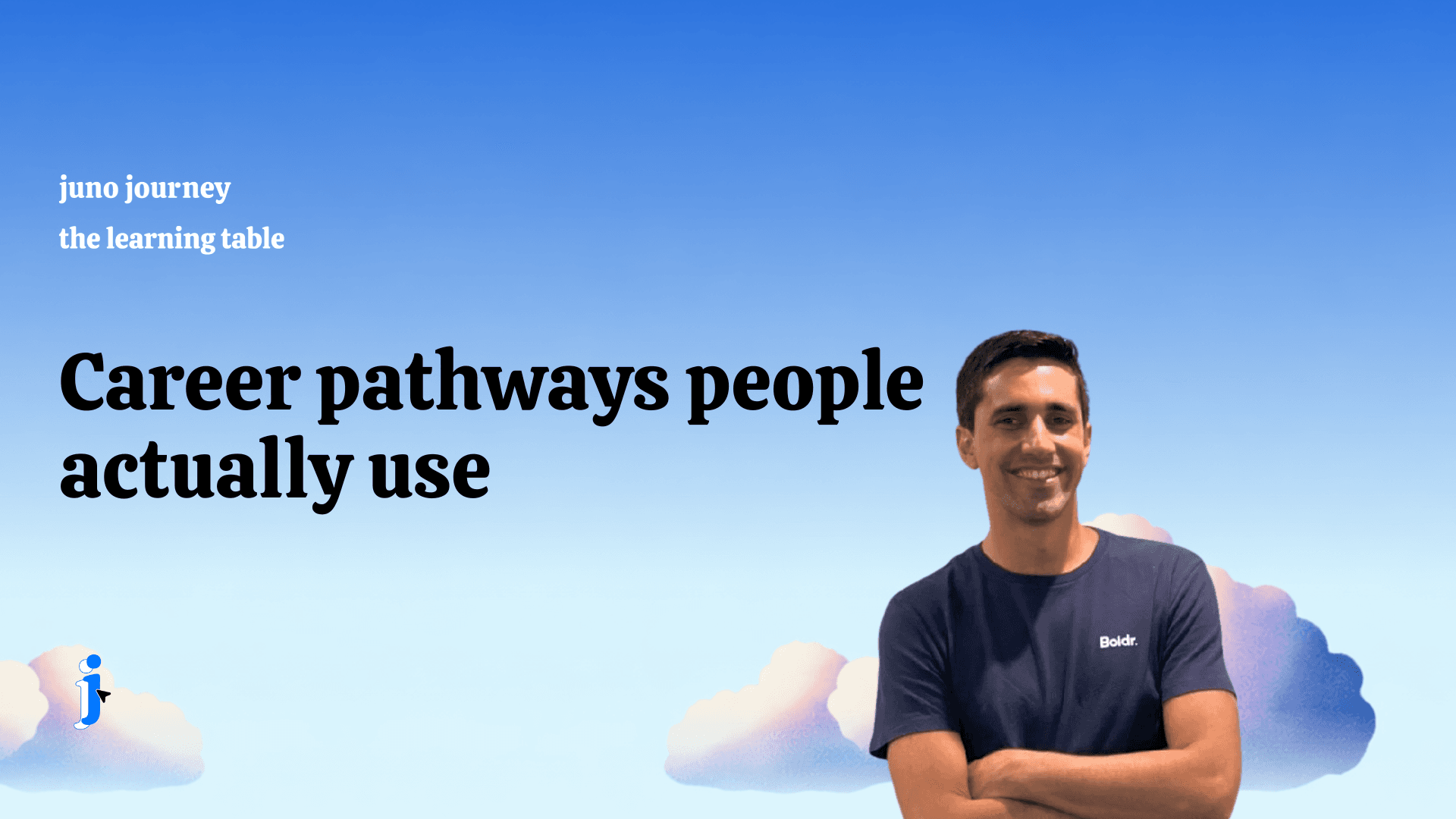
May 20th 2026 | Hosted by Klil Nevo: The Learning Table & Juno Journey
Expert: Jonathan Schneiders
ICYMI: Designing Career Pathways People Actually Use
Usually in a PDF.
Sometimes in a shared drive.
Often beautifully designed.
But very few organizations have career pathways people actually use.
That was the core conversation in our latest Learning Table session, where we shared how Boldr moved from rigid job ladders into a living, skills-based career ecosystem that supports real internal mobility, development, and workforce readiness.
And honestly? The session touched a nerve that many HR, L&D, and Talent leaders are currently feeling:
Work is changing too fast for static career frameworks to survive.
Roles evolve constantly. Skills shift rapidly. Employees want growth that reflects reality — not just another title above them on an org chart. And organizations are realizing that career growth can no longer be designed as a straight line upward.
What We Covered
1. Why traditional career ladders are breaking
Jon opened with a story about “Jennifer,” a software developer whose real strengths and transferable capabilities were completely invisible inside a traditional career ladder. Her organization only recognized vertical movement, not lateral or capability-driven growth.
That example perfectly framed the shift Boldr made:
From rigid job ladders → to dynamic career ecosystems.
From role-based progression → to capability-based growth.
From static titles → to transferable skills.
One of the strongest points from the session:
“A framework that isn’t used is just documentation.”
2. Redefining what “growth” actually means
One of the most powerful moments in the conversation came when Jon shared a simple but important internal question from leadership:
“What is our understanding of growth here?”
Boldr realized growth could no longer mean only promotion.
Instead, they redefined growth as:
- Building new capabilities
- Developing observable skills
- Expanding transferable competencies
- Growing laterally, diagonally, and vertically
- Evolving — even within the same role
This shift fundamentally changed how career conversations happened across the organization.
3. Building career pathways people can actually navigate
Boldr created a unified career ecosystem across seven operating divisions, built around:
- Individual contributor tracks
- Managerial tracks
- Shared competency frameworks
- Observable behaviors and skill expectations
- Clear progression criteria
Employees could now clearly answer questions like:
- “What skills do I need to move to the next level?”
- “How do I transition into another function?”
- “What competencies am I missing today?”
- “What does readiness actually look like?”
And importantly, these pathways weren’t hidden in static documentation.
They lived directly inside their learning platform, fully integrated into employees’ day-to-day workflows.
4. Why manager conversations became the real activation layer
One major theme throughout the session was that career pathways only work when managers actively participate.
Boldr operationalized this through:
- Manager-led career conversations
- Weekly 1:1 discussions around growth
- Role-based learning journeys
- Internal roadshows across departments
- Quarterly reviews with division leaders to keep pathways updated and relevant
One especially interesting insight:
Managers weren’t just told to support development.
They were shown exactly how to do it.
The organization created structured enablement for leaders to discuss competencies, readiness, and development plans with their teams in a practical way.
5. Connecting learning directly to business outcomes
The session also tackled one of the biggest questions in L&D:
How do you prove career development actually impacts the business?
Boldr shared several ways they measure impact:
- Internal mobility rates
- Promotion rates
- Retention rates
- Engagement scores
- Skill progression
- Development plan adoption
- Performance improvement correlations
Some standout results shared during the session:
- 72% increase in learning engagement after launching and operationalizing the pathways
- Employees on development plans showed a 16% higher promotion rate
- Retention rates for employees actively engaged in development were more than 100% higher compared to those not participating in learning paths
Top Takeaways
Career pathways must become living systems
If career growth only exists in PDFs or org charts, people won’t use it. Pathways must live where employees already work.
Growth is not only promotion
Capability development, lateral mobility, and skill evolution are all forms of meaningful growth.
Skills must be observable
If competencies can’t be observed, measured, or coached, they’re almost impossible to operationalize effectively.
Managers are critical to activation
Career frameworks succeed when managers actively participate in development conversations — not when HR owns the framework alone.
Internal mobility becomes easier when people can actually see possibilities
Visibility creates movement. Employees are far more likely to explore growth opportunities when pathways are clear and accessible.
Final Thought
One line from the session stayed with us long after it ended: “A career path that lives on a PDF or shared drive is not a career path.”
As AI reshapes work faster than traditional structures can keep up, organizations need more than static frameworks.
They need dynamic career ecosystems that help people continuously adapt, grow, and stay ready for what’s next.
And that shift starts by designing career pathways people actually use.