
























ICYMI: AI Assistants in HR & L&D: Practical Use Cases for Busy People Leaders
Mar 4, 2026 · 4 min read · By Klil Nevo
The playbook series
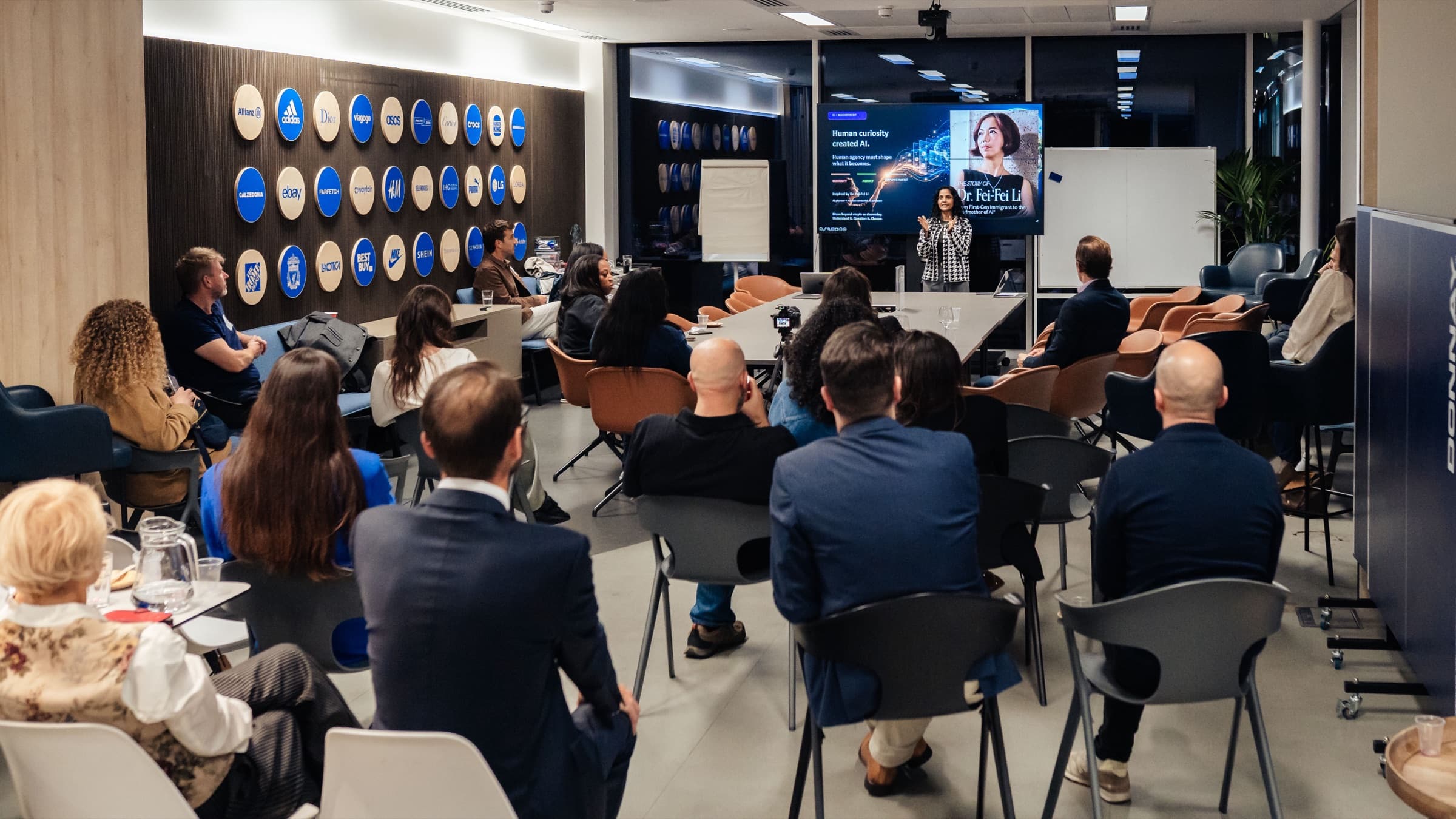
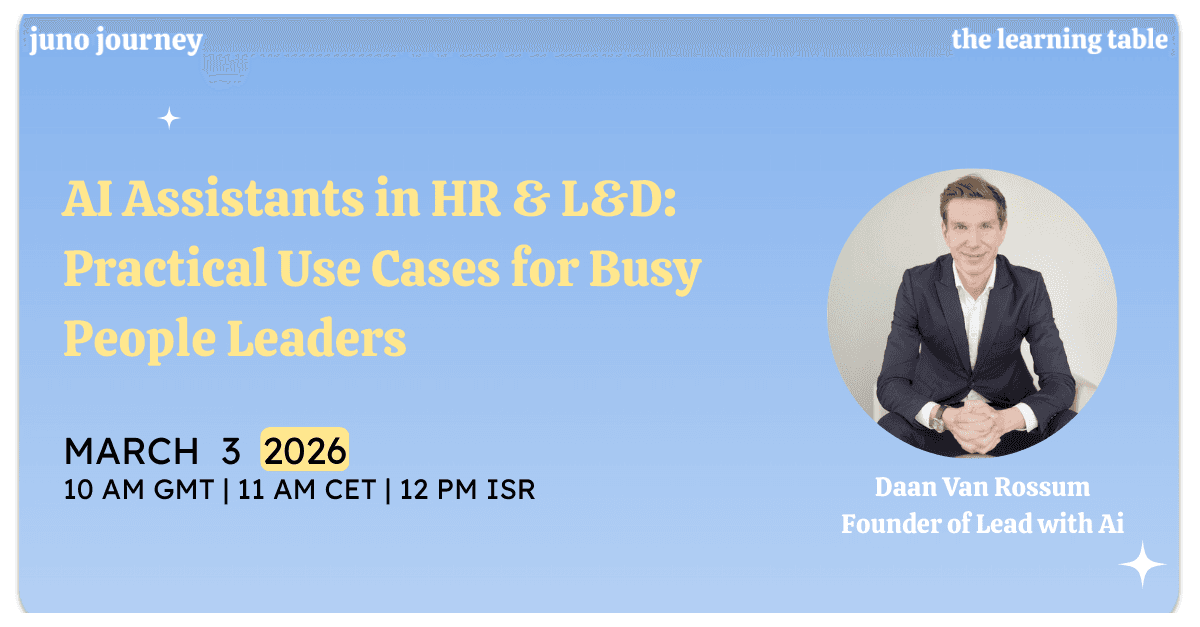
March 3rd 2026 | Hosted by The Learning Table & Juno Journey
Led by: Dan Van Rossum, Lead with AI
AI is everywhere in the conversation right now.
But for most HR and L&D leaders, the question isn’t “Is AI important?”
It’s much simpler:
“How do I actually use it in my day-to-day work?”
In our latest Playbook Series session, we hosted Daan Van Rossum, founder of Lead with AI, for a highly practical discussion on how HR and L&D professionals can start using AI assistants today to save time, improve decisions, and increase their impact.
Instead of focusing on theory, the session explored real workflows, practical prompts, and everyday use cases that people leaders can apply immediately.
The main message was clear: AI doesn’t replace HR and L&D.
It amplifies their thinking, speed, and effectiveness.
From Information Tools to Thinking Partners
Many people still treat AI like a search engine.
But according to Daan, the real opportunity is much bigger.
AI assistants can function as thinking partners — helping professionals analyze situations, structure ideas, prepare conversations, and make better decisions faster.
For HR and L&D leaders juggling multiple responsibilities, this shift can dramatically change how work gets done.
Instead of spending hours drafting documents, structuring programs, or preparing communications, AI can help generate first drafts, frameworks, and insights in seconds — allowing leaders to focus on judgment, relationships, and strategy.
The Most Practical AI Use Cases in HR & L&D
During the session, several practical examples emerged where AI assistants can immediately support people leaders.
1. Drafting HR communications and policies
AI can quickly help draft emails, internal communications, policies, or guidelines — saving time while ensuring clarity and consistency.
Instead of starting from scratch, leaders can refine and adapt AI-generated drafts to their organization’s tone and context.
2. Preparing for difficult conversations
One of the most powerful use cases discussed was using AI as a conversation preparation partner.
HR leaders can describe a sensitive situation and ask AI to:
- suggest approaches
- anticipate reactions
- propose questions
- simulate different responses
This helps leaders enter conversations more prepared and confident.
3. Supporting learning program design
L&D teams can use AI to accelerate the early stages of program design by asking it to:
- Outline learning journeys
- Suggest workshop structures
- generate role-play scenarios
- propose reflection questions
While human expertise remains essential, AI dramatically reduces the time needed to move from idea to prototype.
4. Acting as a research assistant
AI can synthesize large amounts of information quickly.
Instead of spending hours reviewing articles or reports, HR and L&D professionals can ask AI to summarize research, identify trends, or compare approaches.
This makes it easier to stay informed and strategic, even with limited time.
5. Structuring thinking and problem-solving
Many attendees resonated with the idea of using AI simply as a thinking partner.
Leaders can bring messy challenges to AI — such as organizational issues, engagement problems, or capability gaps — and ask it to help structure the problem.
Even when the answers aren’t perfect, the process helps clarify thinking and generate new perspectives.
The Real Skill: Learning How to Ask Better Questions
One recurring theme throughout the session was that AI effectiveness depends heavily on prompting.
The quality of the output depends on:
- the clarity of the request
- the context provided
- the structure of the prompt
Daan encouraged participants to think of prompting as a new professional skill — similar to asking great questions in coaching or facilitation.
The more context and clarity leaders provide, the more valuable the AI response becomes.
Start Small, But Start Now
One of the biggest barriers to AI adoption is the belief that organizations need a complex strategy before getting started.
But the session emphasized the opposite.
The best approach is to experiment with small daily use cases:
- rewriting emails
- summarizing meetings
- preparing presentations
- structuring ideas
- analyzing problems
Over time, these small experiments help professionals build confidence, fluency, and creativity with AI tools.
The Future of Work: Human + AI
The conversation is also connected to a broader shift happening across organizations.
AI is increasingly becoming a collaborative partner in knowledge work.
The future of effective leadership won’t be about choosing between humans and AI.
It will be about learning how to work alongside AI effectively.
For HR and L&D leaders, this creates a new opportunity — not only to use AI themselves, but also to guide their organizations in building AI-ready capabilities.