























ICYMI: AI as your professional coach
Feb 4, 2026 · 6 min read · By Klil Nevo
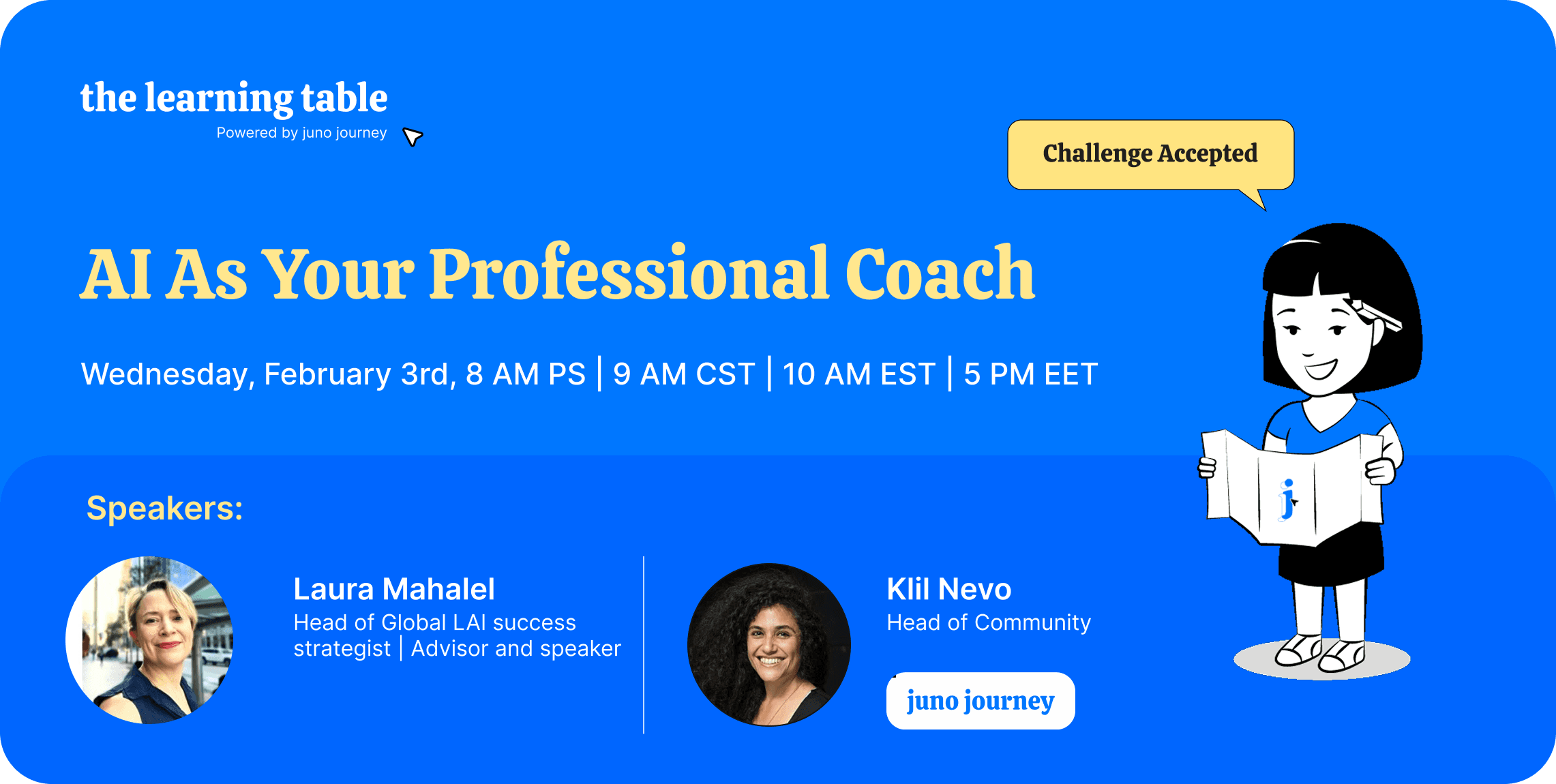
Challenge accepted series
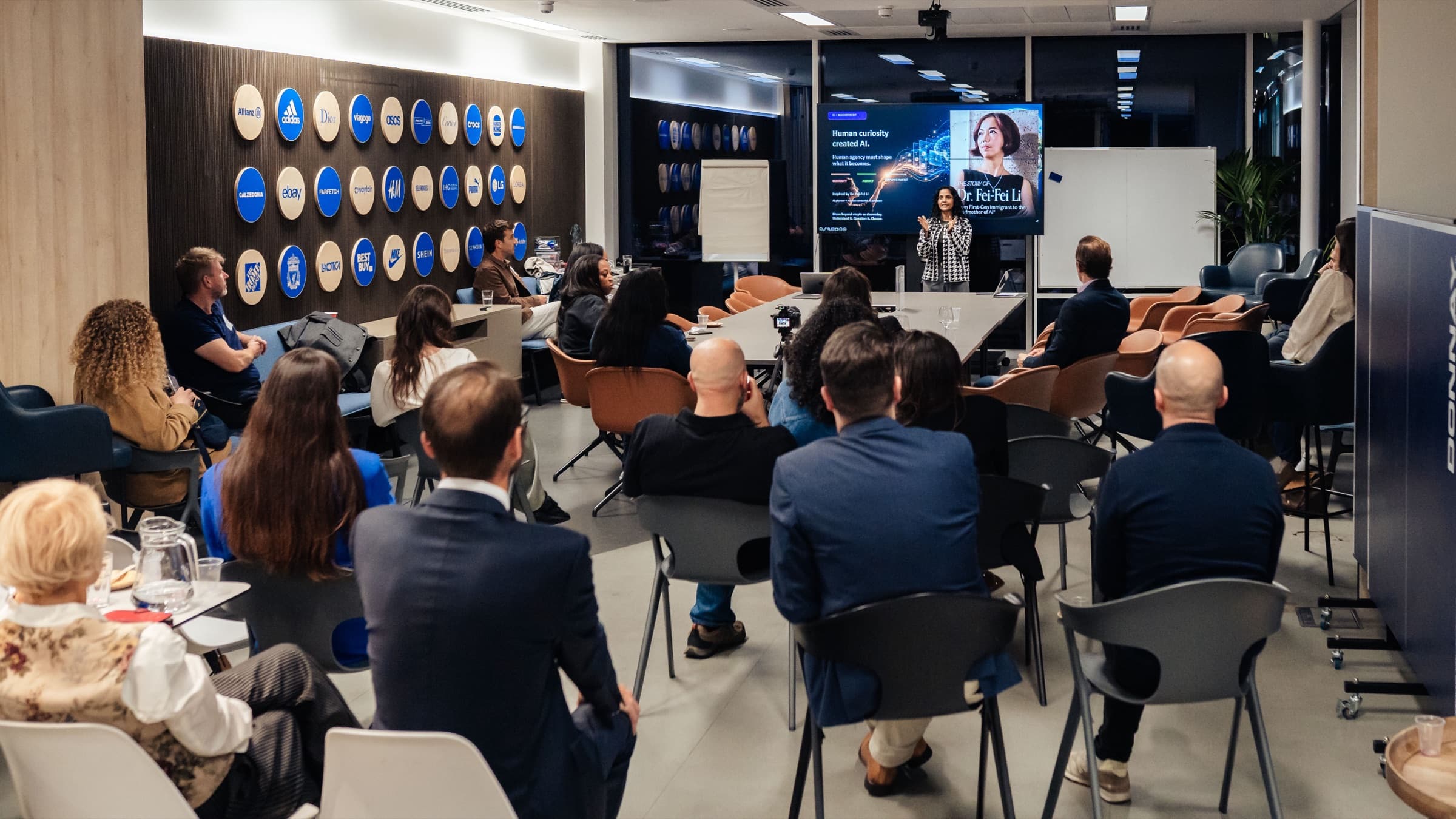
February 3rd, 2026 | Hosted by The Learning Table & Juno Journey
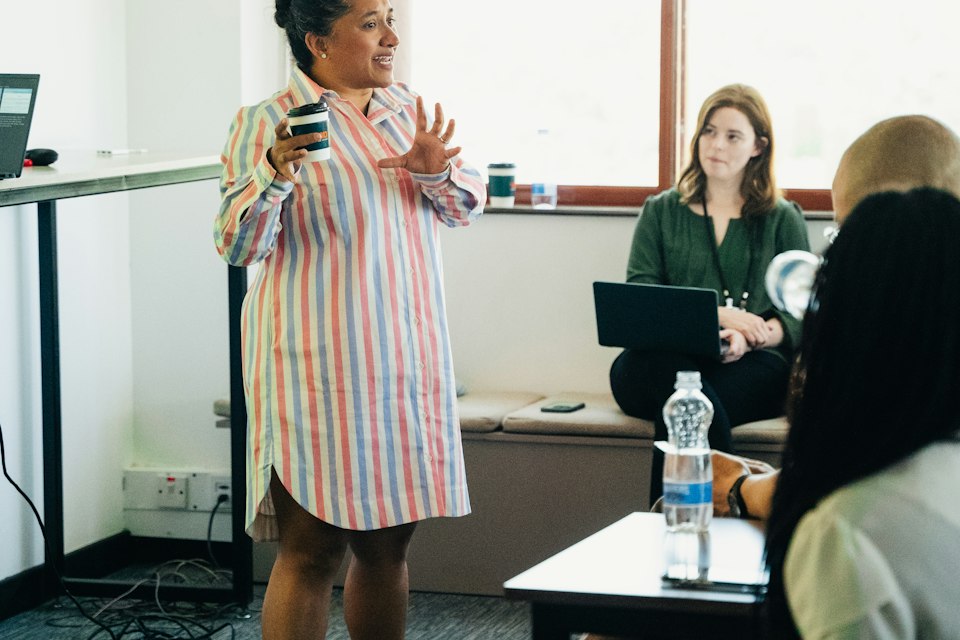
Led by Laura Mahalel
If you’ve ever felt a tiny, private panic that you’re “behind” on AI… you’re not alone.
And that’s exactly why this session worked.
Laura Mahalel didn’t show up with “perfect prompts” or another shiny tool list. She showed up with something HR and L&D leaders actually need right now: a coaching model you can use on yourself — and then scale to your team.
Because the real problem isn’t that people don’t know what AI is.
It’s that many leaders are stuck between expectation and confidence:
- “I’m supposed to guide my org through AI…”
- “…but I’m still figuring out what good use even looks like.”
- “…and everyone’s either hyping it, fearing it, or avoiding it.”
So instead of talking about AI as a tool, Laura reframed it as a capability accelerator — especially when learning itself has become a leadership bottleneck.
1) The SOB Framework: A practical coaching loop you can run anytime
Laura introduced a deceptively simple framework (and yes, she chose the acronym on purpose so you’d remember it):
S — Surface (Sentiment + Surprise)
O — Order (Narrow the focus)
B — Build / Bridge (Skills + habits)
It’s flexible by design: you can apply it to yourself, a team, a project, or even a leadership initiative. But the logic stays consistent:
Surface what’s actually happening → prioritize what matters most → build the capability that closes the gap.
That’s coaching.
Just… with an AI partner that’s available 24/7.
2) Surface: Stop guessing what people feel — mine the signals already around you
Most orgs default to surveys when they want to understand sentiment.
Laura’s take: surveys are often expensive, slow, and (let’s be honest) sometimes distrusted.
But AI can help you surface insight from what already exists — the “messy” unstructured data that teams produce every day:
- Slack conversations
- Jira comments
- Feedback snippets
- Notes from managers
- Screenshots
- Your own observations
And here’s the best part: the data doesn’t need to be clean.
Laura’s mantra showed up early and often:
“Don’t be shy with AI.”
Meaning: stop waiting for the perfect dataset. Start with what you have.
Practical prompts she suggested:
- “What themes are implied but not stated?”
- “What are people really saying under the surface?”
- “What am I missing?”
- “What blind spots might I have here?”
This is where AI becomes less “assistant” and more “mirror.”
3) The biased conversation: Yes, AI is biased, but humans are the baseline
One of the most important moments in the session wasn’t about AI.
It was about honesty.
Laura acknowledged what everyone knows:
- AI is biased (it’s trained on specific data)
- It’s uneven across contexts and cultures
- It can hallucinate
But she also challenged the unspoken assumption many workplaces make:
We treat human judgment like it’s neutral. It isn’t.
So the real question becomes:
“Not is it perfect — but is it as good as or better than the human baseline?”
For HR and L&D leaders, this is especially relevant in high-stakes areas like:
- internal mobility
- promotions
- performance assessment
- development opportunities
Because bias already exists in those systems — AI doesn’t “introduce” it.
It can also help you detect and reduce it if used with guardrails and judgment.
4) Order: AI as the antidote to “shiny object overload.”
Once you’ve surfaced insight, the next risk is… drowning in it.
Laura brought in a simple truth:
To get something done, you have to pick one thing.
(And yes, she used a toilet-based analogy to make sure we’d all remember it. We did.)
She recommended using AI to narrow the focus:
- “What should I prioritize and why?”
- “If I could only work on one challenge this week, what should it be?”
- “Ask me questions to help me prioritize.”
The subtle magic here for HR/L&D:
AI isn’t choosing priorities for you.
It’s helping you think more clearly about tradeoffs, impact, and sequencing.
5) Build: The most hopeful part, learning has never been more accessible
Laura’s biggest emotional point landed here:
“There has literally never been a better time in the history of humanity to be alive and learn.”
She described AI as a democratizer of skill-building:
- It can adapt to your learning style
- meet you where you are
- help you identify what you don’t know
- build practice plans, routines, and habits
She referenced Sal Khan’s “Swiss cheese” metaphor:
We all have gaps in our knowledge — not because we’re incapable, but because careers are messy. AI can help fill holes quickly once you can identify them.
And yes — that includes leadership skills, not just technical ones.
6) The “Vision Map” exercise: get your compass before you build your plan
The session didn’t end with theory. It ended with a surprisingly grounding exercise: standing up, centering, choosing a guiding word, and mapping:
- Mantra (one guiding word)
- Why (why it matters now)
- Current state (what’s true today)
- Future state (what success looks like)
- Supports (resources you can lean on)
- Obstacles (what could block you)
- Strategic actions (and then… circle one action for the next 7 days)
Simple. Human. Practical.
And then, very on brand for this session, she invited people to take a photo of the messy handwritten map, drop it into AI, and use it to:
- clarify the plan
- stress-test assumptions
- translate it into a calendar
- communicate it to a team
This is the loop: human clarity → AI amplification → back to human action.
7) The best “how-to” moment: role-play difficult conversations with voice mode
The session closed with a live demo that made people laugh… and also quietly think:
“Oh wow. I could actually use this.”
Laura used voice mode to role-play a tough leadership conversation:
- HR leader proposes an AI approach
- Leader pushes back hard on privacy and risk
- She asks the AI for strategies
- then asks the AI to be “really harsh.”
And it worked because it reframed AI coaching as practice, not replacement.
Which leads to the big trust takeaway from the Q&A:
AI doesn’t remove humans from coaching — it can remove the friction that stops people from practicing.
What HR & L&D leaders can take from this (without changing your whole org)
If you do nothing else this week, steal this:
- Pick one real challenge you’re facing (confidence, skill gap, leadership pushback, messy data).
- Run SOB on it:
- Surface what’s real
- Order what matters
- Build the smallest habit that moves it
- Practice one tough conversation with voice mode before having it in real life.
And remember the line Laura repeated at the end:
You are not behind. Pick one thing you’ll try this week.