ICYMI: Staying Human — 5 Perspectives on Work, Learning and AI
Challenge Accepted series
September 17th, 2026 | Hosted by The Learning Table, Juno Journey
Experts:
ICYMI: Staying Human-
5 Perspectives on Work, Learning and AI
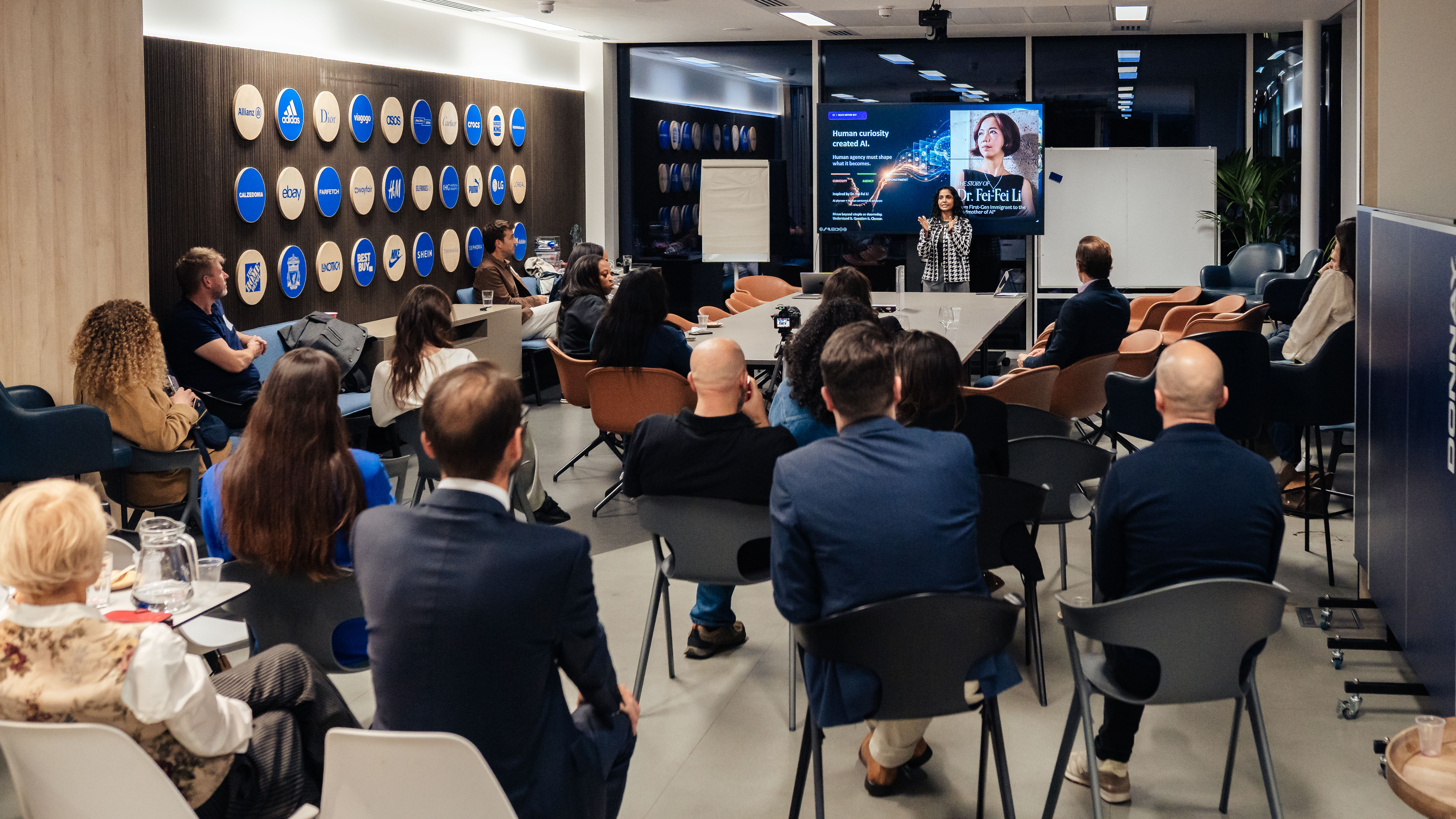
On September 17th, 2026, in London, we brought together People, HR, L&D, Talent and Enablement leaders for Staying Human, an evening built around a question that is becoming harder to ignore:
As AI becomes capable of doing more of our work, what should we hand over — and what should we deliberately keep human?
Across five short talks, we heard five very different perspectives.
We talked about learning and the danger of removing too much friction. About keeping up with a pace of change humans weren't designed for. About deciding which HR processes should be automated and which shouldn't. About using AI without outsourcing our own thinking. And about why measuring "AI adoption" may be missing the point entirely.
Different talks, but one theme kept coming back:
The goal isn't to get humans to use more AI. It's to redesign work so humans and AI each do the things they're best positioned to do.
Here are five ideas we're still thinking about.
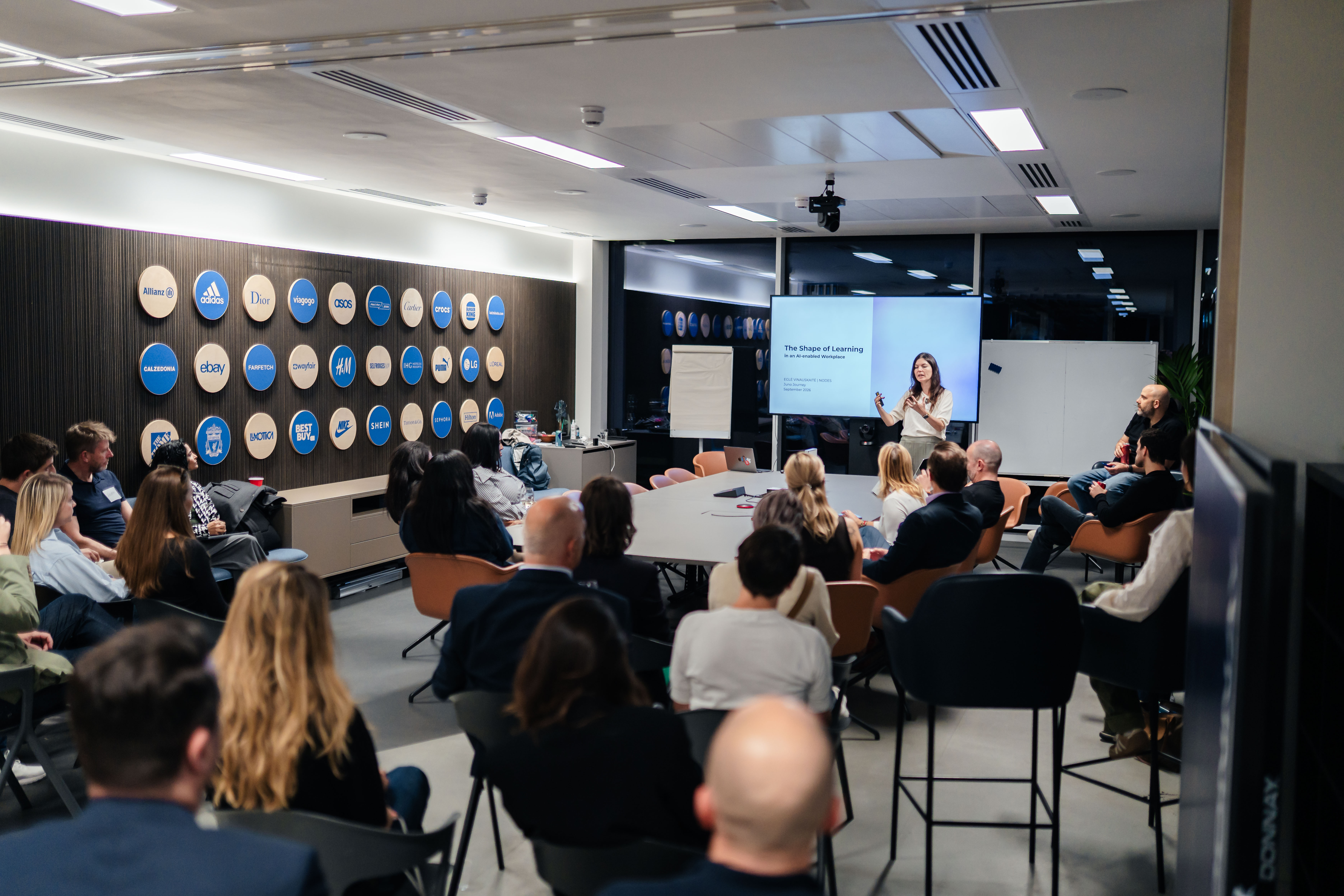
1. Egle Vinauskaite: What if making work easier also makes it harder to learn?
Egle opened with something many L&D teams already know: AI can be an extraordinary learning tool.
It can personalize explanations, provide feedback, create simulations and role-plays, support retrieval practice, evaluate open-ended assignments, and help people learn at the exact moment they need support.
But she challenged us to look at the other side of that equation.
Learning requires effort.
Some of the friction AI is removing from work is the exact friction through which people used to develop expertise.
When someone wrestles with a problem, works through uncertainty, makes a mistake and tries again, they're not simply completing a task. They're building knowledge, judgment and mental models.
Remove all those repetitions and something interesting happens: people can produce increasingly sophisticated outputs without necessarily developing the underlying capability themselves.
Egle described three risks alongside the much more familiar idea of upskilling: deskilling, when skills deteriorate because we're no longer practising them; misskilling, when people learn incorrect things from AI without having enough expertise to spot the errors; and neverskilling, when AI enables someone to perform at a level they never actually learn to reach independently.
Her challenge to L&D was therefore bigger than creating AI-powered learning.
She introduced the idea of Cognitive Design: deliberately designing the systems, incentives, workflows, friction and even "slack" around work so that performance today doesn't come at the expense of capability tomorrow.
That may mean occasionally doing something counterintuitive: putting useful friction back into work.
The takeaway
AI gives L&D incredible new ways to support both upskilling and performance. But L&D's role may now expand into a third space: designing the environment in which people think, practise and develop.
The question isn't simply "Can AI do this for someone?"
We also need to ask: "What does the person stop learning if it does?"
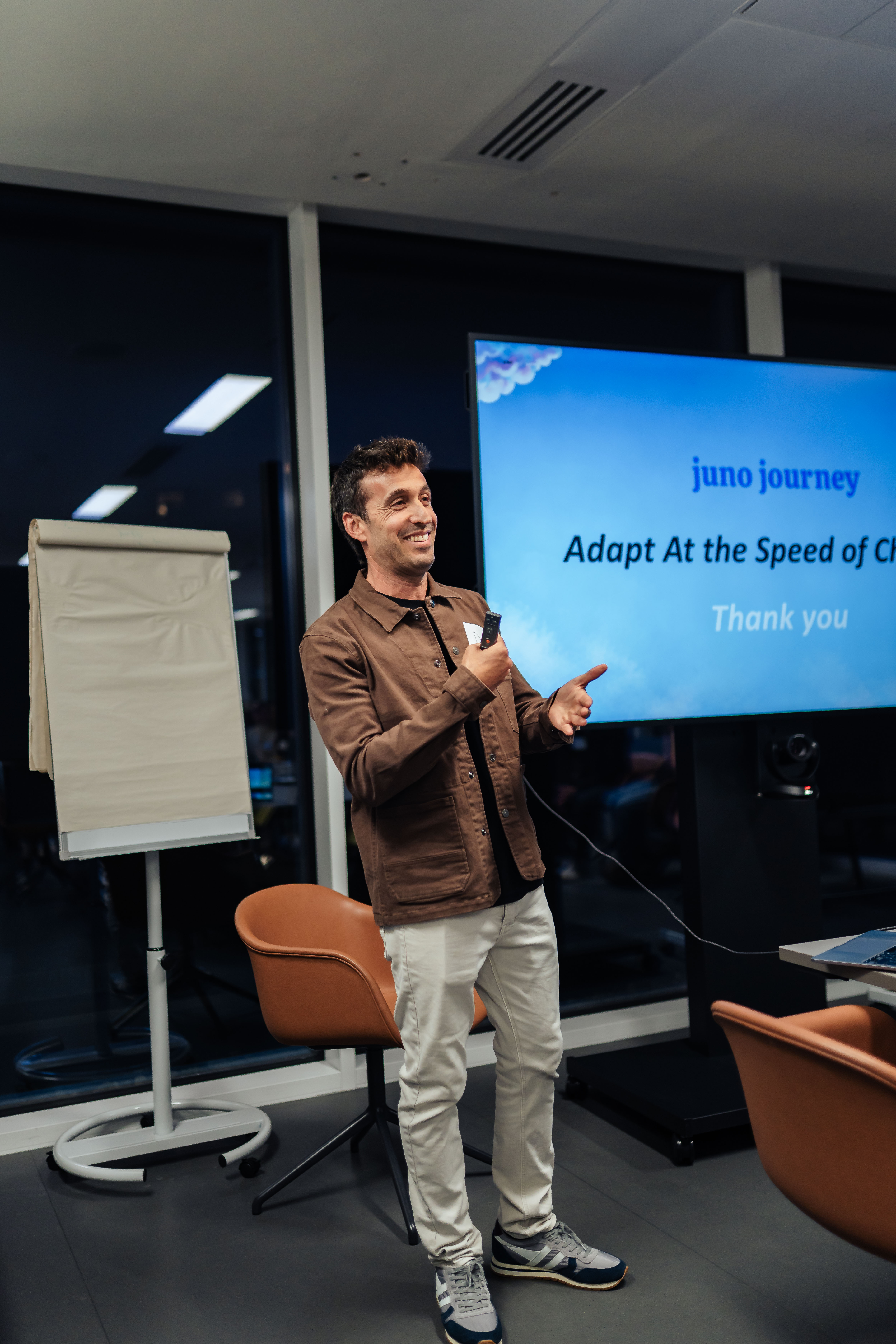
2. Dor Nachshoni: The new bottleneck is human adaptation
Dor approached the AI conversation from a completely different direction: speed.
AI has dramatically accelerated our ability to build and change software. Products can evolve continuously, features can ship faster, and organizations can change their technology stack at a pace that would have been impossible only a few years ago.
But humans haven't suddenly become infinitely faster at absorbing change.
That creates a new bottleneck.
It used to be difficult to build and ship software. Increasingly, the challenge is getting employees, customers, and partners to understand what changed and adapt their behavior accordingly.
Dor suggested four questions organizations need to become much better at answering:
What changed?
Who is impacted?
When do they need to know?
What behavior needs to change as a result?
Not every product update needs a course. Not every change needs an announcement. And not everyone needs the same information.
The opportunity for AI is to connect those dots automatically: detect change across business systems, understand who it matters to, create the relevant learning or enablement, deliver it at the right moment, and eventually measure whether behavior actually changed.
And that leads to an important distinction:
Giving people access to AI isn't the same as adapting the organization to AI.
Tools provide capability. Humans still provide context, judgment, prioritization, and an understanding of what actually matters.
The takeaway
As the speed of technological change accelerates, L&D and Enablement can't simply produce more content faster.
They need to build systems capable of continuously translating change into human behavior.
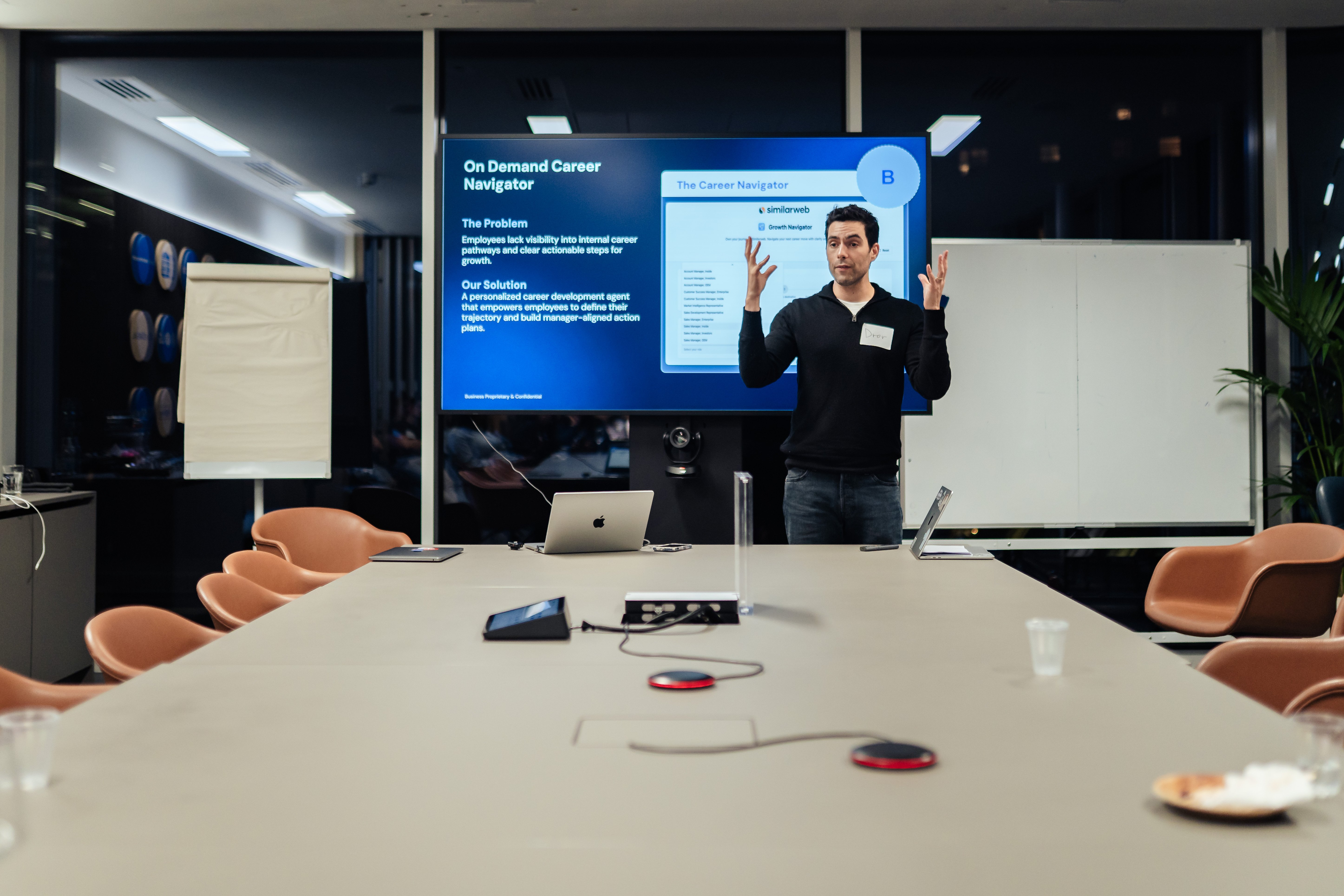
3. Dror Yaacobi: Don't ask where AI can be used. Ask where it creates value.
Dror brought the conversation straight into the reality of HR at Similarweb.
Like many organizations, the initial excitement around generative AI led to experimentation everywhere: agents, apps and new tools.
Then came the more difficult question:
What's the ROI?
His framework separated AI use cases into three broad categories: work that can be fully automated, work that should be hybrid, and experiences that should remain fundamentally human.
For full automation, he shared the example of repetitive HR questions. Instead of HR teams repeatedly searching policies and answering questions about holidays, benefits or processes, Similarweb built an AI agent that gives employees those answers directly. The result is faster access for employees and significantly less operational work for HR.
Then there's the hybrid middle.
Managers can use an AI agent trained on Similarweb's management philosophy, tools and processes to think through a difficult conversation before speaking with HR. Employees exploring career opportunities can use AI to understand possible paths and skill gaps before sitting down with their manager.
AI does the preparation.
The human does the coaching, judgment, and relationship-building.
And then there are places where Similarweb has deliberately chosen not to automate.
Recruiting was one example. Technically, an AI agent could conduct an initial candidate interview. But if the goal is to attract great talent and build a relationship from the very first interaction, efficiency isn't the only metric that matters.
Sometimes the fact that AI can do something isn't a sufficient reason to let it.
The takeaway
The best AI strategy isn't "AI everywhere."
Start with the business problem and decide deliberately:
Automate it? Augment it? Or protect the human interaction?
4. Anji Saraswathyamma: AI should accelerate your thinking, not replace it
Anji's talk brought the conversation back to something deeply personal: our own relationship with AI.
She shared that she hadn't always been enthusiastic about it. Her journey started with understanding the technology more deeply and eventually experimenting with how it could support her own work.
One of the traps she identified is incredibly relatable.
AI produces something polished.
It looks good. It sounds convincing. And because it arrived in seconds, it's tempting to accept it.
But "good-looking output" isn't necessarily good thinking.
Her approach became much more deliberate: before handing a problem to AI, first establish the human thinking behind it.
What do I think about this?
What's my analysis?
Where can AI genuinely improve the work?
What can AI do that I can't?
And what part still specifically needs me?
She shared an example from designing enablement around a new methodology. Instead of asking AI to invent the solution from scratch, she gave it the context, personas, data and thinking she had already developed.
AI dramatically compressed the time required to turn that thinking into something usable.
But the quality still came from the human input.
The takeaway
AI is extraordinarily good at accelerating.
But speed isn't a substitute for judgment.
The more capable our tools become, the more important it may be to know what we think before we ask the machine what it thinks.
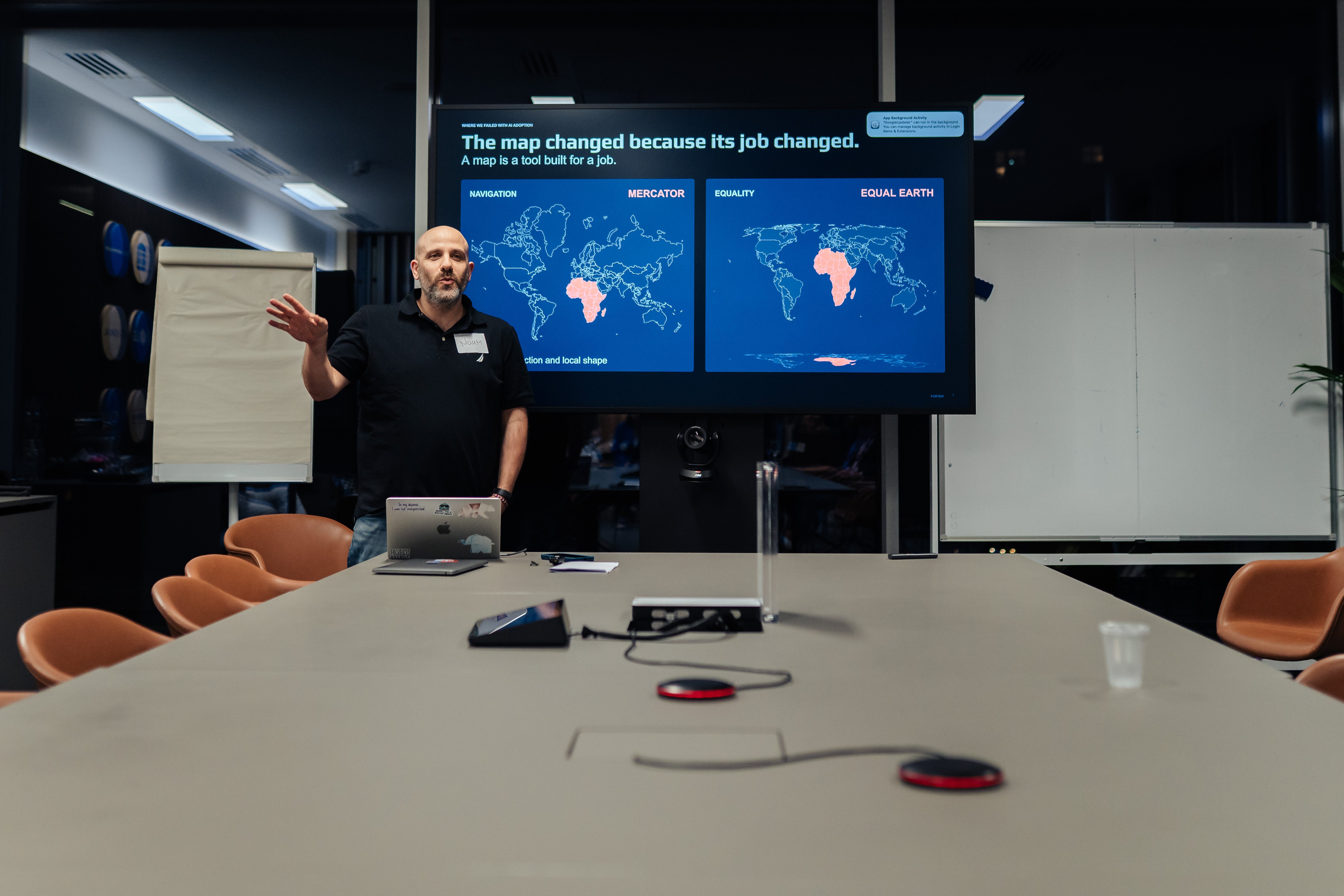
5. Noam Wakrat: Stop measuring AI. Measure better work.
Noam closed the talks with a refreshingly practical look at what happens when AI adoption programs don't work as planned.
He shared three experiments that didn't deliver what Forter initially expected.
First: measuring AI usage.
Tokens used. Logins. How many people built something.
Easy metrics to collect — but not necessarily meaningful ones.
An SDR using an AI-powered tool created by someone else may never open an AI interface or consume a visible token themselves. They're still benefiting from AI.
Which leads to a much better question:
Why are we measuring whether people are getting better at AI instead of whether they're getting better at their jobs?
Second: giving everyone dedicated "AI learning time."
Employees said they didn't have time to experiment, so the company gave them time. But removing the time constraint didn't solve the blank-page problem: What should I actually do with AI, and how does this relate to my job?
Third: AI champions.
Early adopters were enthusiastic, but enthusiasm alone didn't automatically make them effective change agents. Their colleagues still faced the same problems: lack of time, lack of context and difficulty translating someone else's AI use into their own work.
The lesson was simple: bring learning to the problem.
Help people use AI where there's a real pain point, in the flow of their actual work.
And keep experimenting.
Some AI initiatives will fail. Tools will change. Today's solution may be irrelevant six months from now. The answer isn't to stop experimenting — it's to learn quickly and avoid falling in love with any particular tool.
The takeaway
AI adoption isn't the outcome. Better performance is.
Measure the work, not the technology. Teach at the point of need. Experiment quickly. And be prepared to throw away today's solution when something better arrives.
So, where does that leave the human?
Perhaps the most interesting thing about the evening was that none of the speakers argued for protecting human work simply because "humans should do it."
Instead, they gave us a much more useful way of drawing the line.
Let AI remove repetitive work.
Let it find information, accelerate production, personalize support, surface knowledge, and help us navigate complexity.
But pay attention to what disappears when we remove the work.
Because sometimes friction builds expertise.
Sometimes a conversation builds trust.
Sometimes struggling with a problem develops judgment.
Sometimes the inefficient human moment is actually where learning, relationships, or creativity happen.
And sometimes automation really is just better.
Staying Human isn't about resisting AI.
It's about becoming much more intentional about what we automate, what we augment, what we continue to practise, and what we refuse to give away.