






















ICYMI: Ditch the Annual Review: Building Continuous Performance and Mobility for the AI Era
Oct 15, 2026 · 9 min read · By Klil Nevo
The Leadership Table series
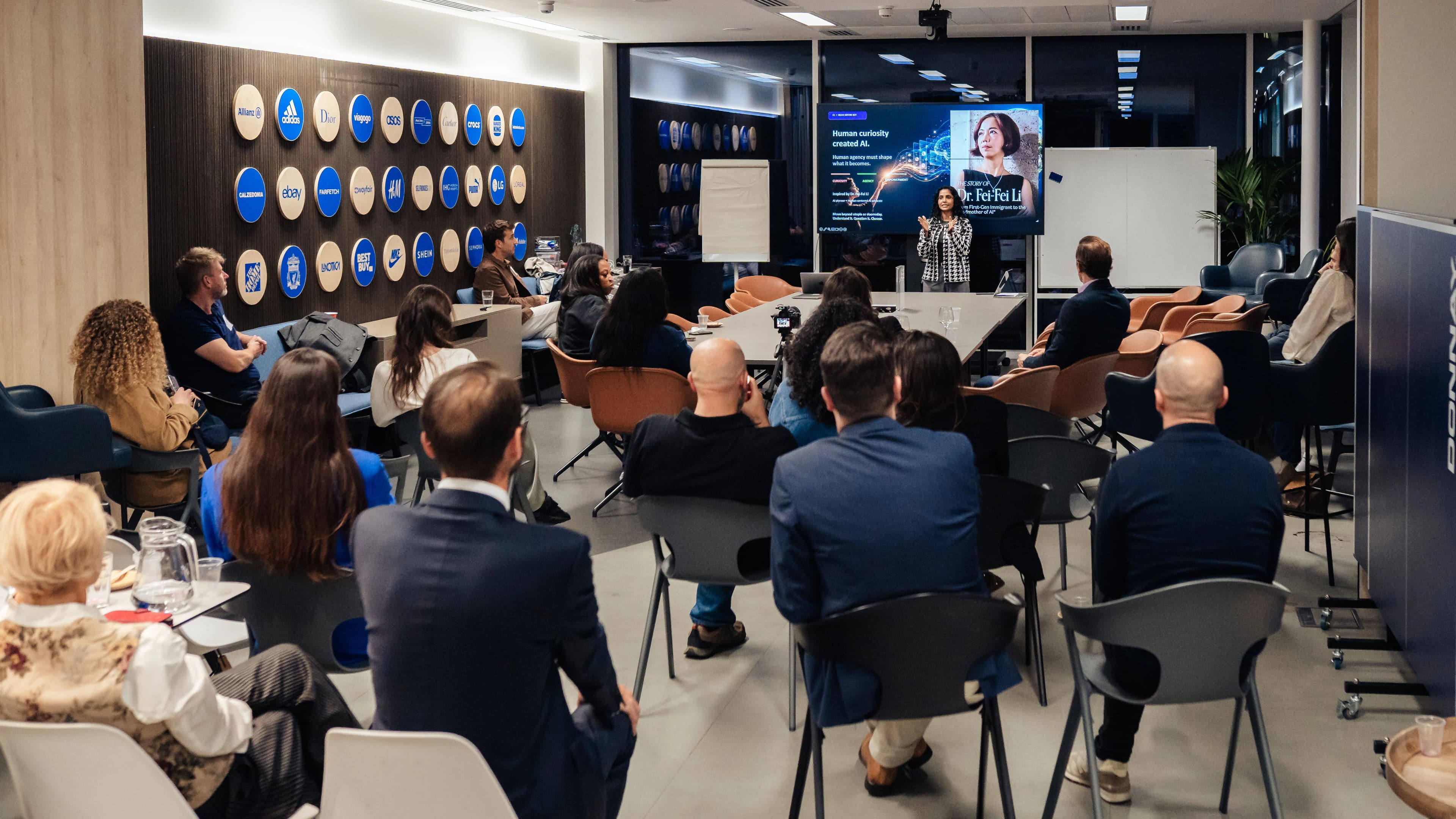
October 14, 2026 | Hosted by Juno Journey, Berlin
Experts: Elise Goodreault | Webflow
What if your performance management process eats up thousands of hours, frustrates employees, and still doesn't tell you who's actually performing?
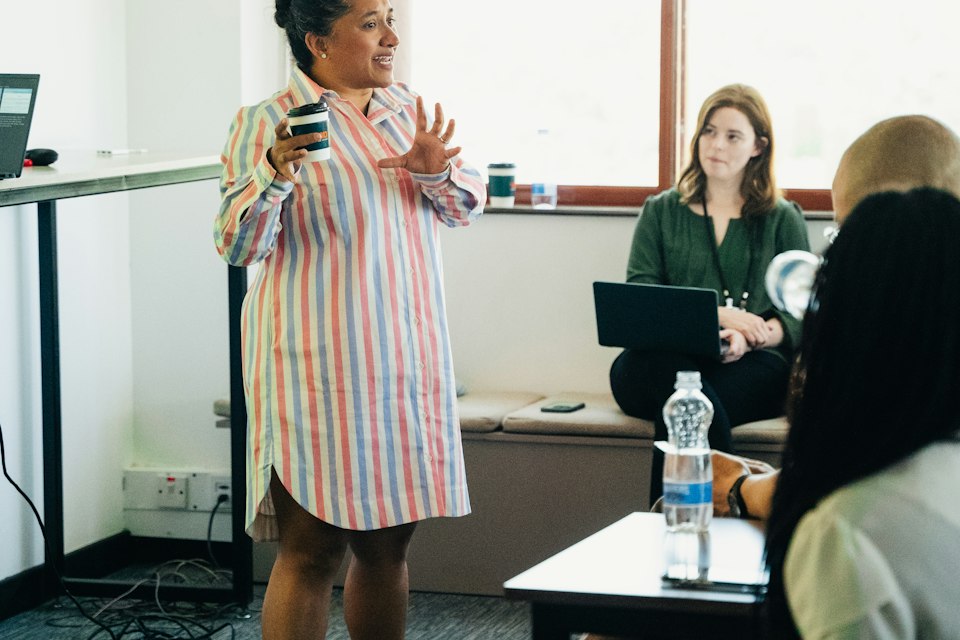
That's exactly the challenge Elise Goodreault, L&D leader at Webflow, brought to our latest Learning Table session.
And she started with a confession:
Despite the session title, Webflow hasn't actually ditched the annual review.
Instead, they're doing something arguably more valuable: questioning every part of the performance management process and rebuilding it around what employees, managers, and the business actually need.
Elise shared an unusually transparent look at Webflow's performance management transformation, the difficult trade-offs behind it, and how AI could fundamentally change the way organizations develop managers and support employee performance.
Here are the biggest lessons from our conversation.
1. When performance management becomes more work than value
Before redesigning its approach, Webflow had a comprehensive performance management program.
Quarterly check-ins, mid-year and annual reviews, multiple assessment dimensions, self-evaluations, upward feedback, separate performance and compensation conversations, and different review timelines for sales and the rest of the organization.
Every component had been introduced with good intentions.
But together, they created an increasingly complicated process.
And the numbers told a concerning story.
7,000 Hours spent annually running performance cycles
97% Of employees received one of the top two ratings
Meanwhile, satisfaction with career conversations had declined, and the company hadn't achieved all its business goals.
The disconnect was hard to ignore. Performance ratings weren't providing a meaningful picture of organizational performance, while the process itself demanded an enormous investment of time.
Elise also raised a particularly important point: the process had effectively been designed around managers who might not otherwise provide feedback.
Rather than developing stronger management habits, the organization had added more structure to compensate for inconsistent ones.
The lesson: More process doesn't necessarily create better performance. Sometimes it simply makes ineffective habits more expensive.
2. Ditch the burden. Keep the clarity.
Webflow's redesign wasn't about eliminating accountability or making performance management less rigorous.
It was about removing unnecessary work while making expectations clearer.
The team made several significant changes:
- Replaced quarterly formal check-ins with mid-year and annual reviews.
- Reduced assessment dimensions from three to two.
- Moved feedback into the engagement survey upward.
- Made certain self-evaluations optional.
- Combined performance and compensation conversations.
- Aligned the organization around one review cycle.
- Clarified performance ratings to better distinguish different levels of contribution.
These decisions weren't necessarily popular or easy. Each removed component had originally served a purpose.
But that was precisely Elise's point: organizations need to be willing to challenge even well-intentioned processes when the overall system stops delivering value.
One particularly interesting decision was combining performance and compensation conversations. While some HR professionals strongly advocate keeping them separate, Webflow chose to make the connection between performance and pay more explicit.
There isn't necessarily one universal answer.
The lesson: The goal isn't to copy another company's performance management model. It's to understand what your organization needs and have the courage to remove what no longer serves that purpose.
3. Continuous performance requires better managers, not more reviews
One of the strongest themes throughout the conversation was the relationship between performance management and manager capability.
Organizations often respond to inconsistent feedback by introducing additional check-ins, templates, and mandatory processes.
But if managers lack the skills to coach, provide feedback, or set clear expectations, more frequent reviews won't solve the underlying problem.
Webflow has made weekly one-on-ones an explicit coaching expectation for managers.
Elise also challenged participants to distinguish between coaching, feedback, and direction.
Coaching involves helping someone discover their own solutions through thoughtful questions. Feedback requires clarity about what happened and what needs to change. And sometimes managers simply need to provide direction.
These are different skills, and managers need to know when to use each.
Making coaching part of everyday management also requires more than training. Elise highlighted the importance of executive role modeling, clear leadership competencies, and recognizing managers who demonstrate strong coaching capabilities.
The lesson: Continuous performance management isn't a calendar of recurring meetings. It's a set of management behaviors that happen consistently between formal reviews.
4. AI is changing what performance management can look like
As organizations rethink performance management, AI introduces opportunities to make development more personalized, timely, and connected to actual work.
Elise shared three approaches she's exploring at Webflow, each at a different stage of development.
Personalized manager playbooks
Imagine giving every manager a development playbook built around their team's goals, engagement data, performance insights, and individual feedback.
Rather than offering the same generic management guidance to everyone, AI could help identify what each manager needs to focus on to improve team performance.
Elise emphasized that this is still a concept she's exploring, with important privacy and security considerations to address.
AI-generated learning plans
This one is already being developed and deployed.
At Webflow, new managers complete a foundational management course and an assessment based on the company's leadership competencies.
Using Claude, Elise has built an automated workflow that analyzes assessment responses, identifies three priority development areas, and creates personalized learning plans.
The workflow can also deliver resources through Slack and create tracking tasks in Asana.
It's a practical example of how L&D teams can offer individualized development without manually building a separate program for every manager.
Coaching between performance reviews
Elise's third idea is an AI coach that could analyze meeting notes and manager interactions to provide timely suggestions for improving feedback and coaching.
Rather than waiting for the next leadership workshop, managers could receive support in the tools they already use.
This remains an idea Elise is exploring rather than an implemented Webflow program.
Across all three approaches, one principle remains essential: AI should help managers become better at the human parts of their jobs, not replace those interactions.
5. Performance expectations must evolve alongside AI
Another interesting change at Webflow is how AI adoption is becoming part of employee performance expectations.
The company introduced four levels of AI capability:
Resistant, Limited willingness to adopt AI, Capable, Can use AI tools, Adoptive, Incorporates AI into work, Transformative, uses AI to fundamentally improve ways of working.
Employees are now expected to reach at least the adoptive level to meet expectations in the capabilities category of their performance assessment.
This raises an important question for HR and L&D leaders:
If AI is fundamentally changing how work gets done, shouldn't our definition of good performance change with it?
Simply completing tasks or demonstrating existing technical skills may no longer be enough.
Organizations increasingly need to understand whether employees can adapt, learn, and apply new capabilities as their roles evolve.
But these expectations also create a responsibility for L&D teams: employees need meaningful opportunities to develop the capabilities they're being assessed against.
6. Want leadership to support change? Speak their language.
One of the most practical parts of the session focused on a familiar challenge: convincing executives to change an established HR process.
Elise's advice was straightforward.
Don't lead with performance management philosophy. Lead with the business problem.
Quantify the hours spent on the current process. Examine whether performance ratings reflect business outcomes. Identify inconsistencies across managers and teams.
Then make a clear proposal.
Show leadership what you'll keep, what you'll remove, and what you expect to improve. Consider testing changes through a smaller pilot before introducing them across the organization.
And be transparent about what you don't know yet.
For L&D and HR leaders, this is an important shift in positioning.
Instead of asking executives to invest in a better employee experience alone, demonstrate how simplifying performance management can return valuable time to the business while strengthening accountability and development.
7. The best development happens while people are doing the work
One example from Elise's session captured this particularly well.
She built a Claude-based tool called So You Want to Promote Somebody.
On the surface, it helps managers prepare a promotion case.
But as they work through the process, the tool introduces relevant organizational design principles, prompts critical thinking, and highlights potential issues.
For example, if a manager proposes promoting an individual contributor into a people management role with ten direct reports, the tool can flag the potential challenges and explain why that structure deserves more consideration.
The manager gets help completing a real task while developing better judgment along the way.
No separate workshop required.
This represents an important opportunity for L&D: moving beyond delivering knowledge toward embedding development directly into the moments when people make decisions.
And it's closely connected to what we're building at Juno Journey.
As organizations change faster, employees and managers need access to the right knowledge, guidance, and development opportunities when they need them. Juno's approach to workforce readiness is built around connecting learning and development to actual business needs, rather than treating them as separate activities.
The bigger picture: Less process. Better performance.
Perhaps the most important takeaway from this Learning Table conversation is that modernizing performance management isn't necessarily about replacing annual reviews with something newer.
It's about reconsidering what performance management is supposed to accomplish.
Employees need clarity about expectations and growth. Managers need the skills and resources to support their teams. Organizations need meaningful information about performance and capabilities.
And everyone needs more time to focus on work that actually matters.
Elise closed with a reminder that feels especially relevant in today's environment: people's attention is limited, and HR and L&D leaders need to be ruthless about where they ask people to invest it.
Use the time you already have. Let AI handle administrative work where appropriate. Keep the conversations human.
The future of performance management may not require more reviews, more forms, or more training. It may simply require better conversations, clearer expectations, and smarter support between the moments we formally measure performance.