


































Why adaptability, curiosity, and resilience are becoming essential to workforce readiness, and how organizations can actually develop them.
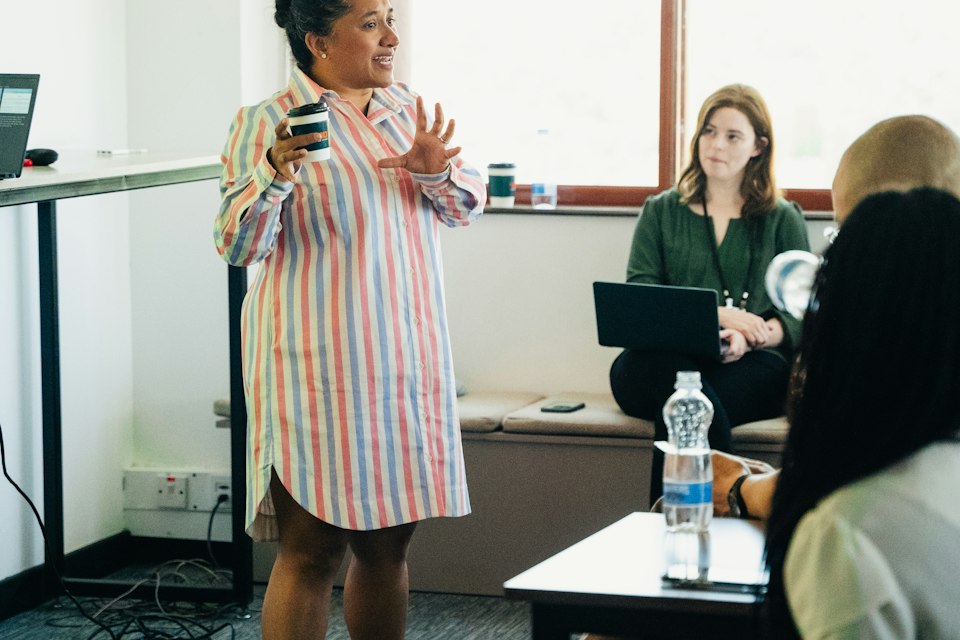
Featuring Kira Squire, Senior Learning & Development Specialist at LastPass
The Learning Table | Challenge Accepted | October 28, 2026
Think about the best person you've ever worked with.
What made them exceptional?
Was it their technical expertise? Their certifications? Their ability to use a particular system?
Or was it something else?
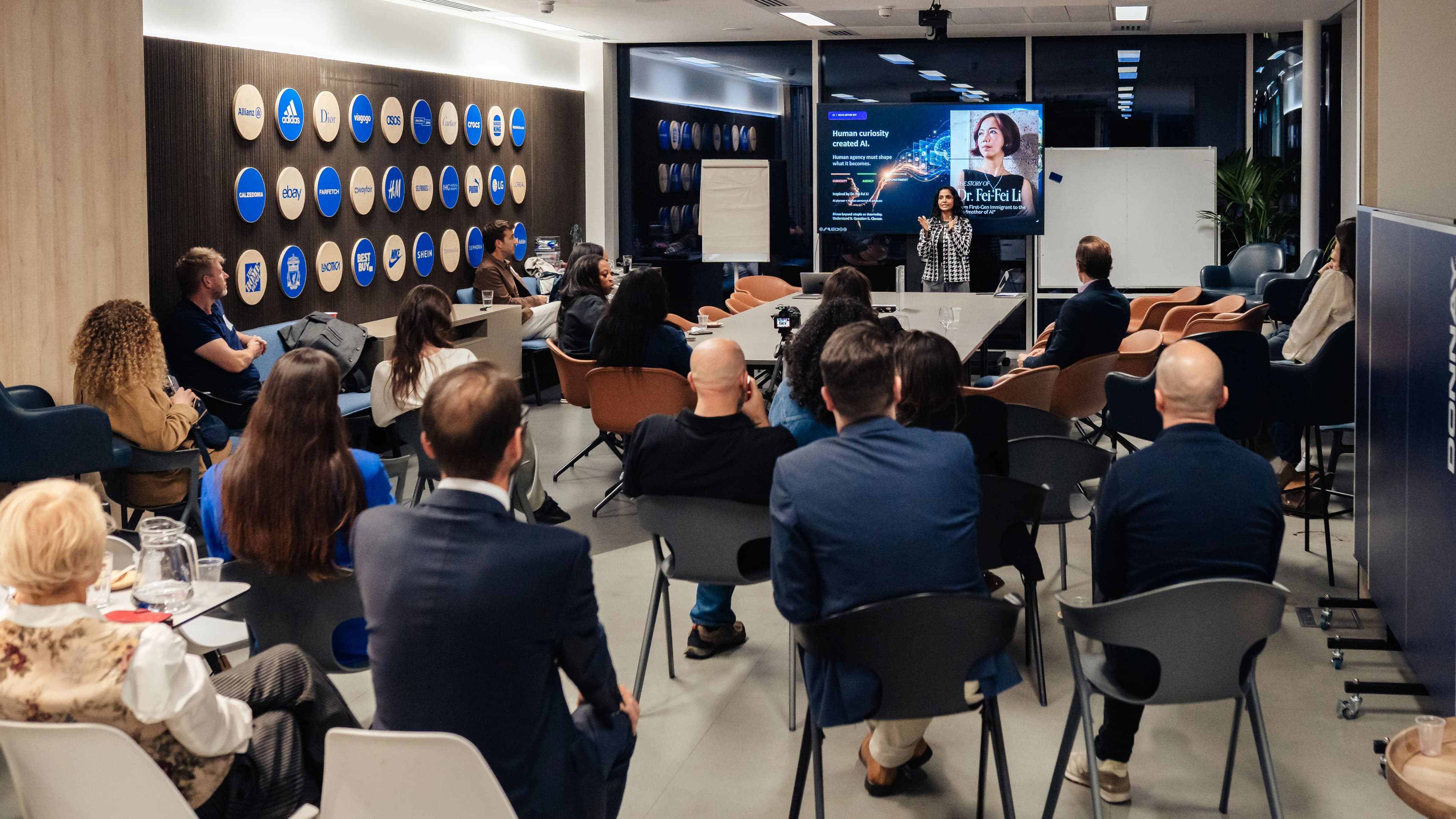
Kira Squire, Senior L&D Specialist at LastPass, opened our latest Learning Table session with this question.
The answers from the audience were revealing: adaptability, problem-solving, patience, curiosity, communication, and the ability to take responsibility.
Then Kira asked a second question:
How many of those qualities would appear at the top of a job description?
And there's the disconnect.
We hire people based on what they know today, even though much of that knowledge may become outdated within a few years. Meanwhile, the qualities that help people navigate uncertainty, learn new things, and perform when the rules change are often treated as secondary.
During this highly interactive session, Kira challenged us to rethink how we hire, develop, recognize, and reward the skills that make people successful in an increasingly unpredictable workplace.
And she didn't stop at theory. She shared what happened when LastPass had just 14 days to launch an organization-wide AI learning initiative, why traditional training often falls short, and a practical framework for developing adaptability across the workforce.
Here are the insights worth taking back to your organization.
1. We're Hiring for Today's Skills in a World That Won't Stand Still
According to the World Economic Forum's Future of Jobs Report 2025, employers expect 39% of workers' existing skills to change by 2030, while 63% identify skills gaps as a major barrier to business transformation.
The problem isn't simply that employees need to learn more.
It's that organizations are struggling to keep up with how quickly the definition of a capable employee is changing.
Kira introduced an important distinction between two categories of skills.
Technical skills are the specific knowledge and capabilities required to perform a defined task: using software, understanding a process, programming, or operating a system.
Adaptive skills are the behaviors and mindsets people rely on when the situation is unfamiliar, the problem is unclear, or the usual approach stops working.
These include:
- Adaptability: Changing your approach when new information challenges what you previously believed.
- Resilience: Recovering from setbacks, seeking support, and maintaining a sustainable pace.
- Curiosity: Asking thoughtful questions and actively exploring unfamiliar ideas.
- Communication: Helping others understand, connect, and act.
- Learning agility: Applying lessons from one experience to a new situation.
- Influence: Helping people move forward, even without formal authority.
Technical expertise remains essential. But technical skills alone cannot guarantee long-term performance.
Kira presented the audience with a hiring dilemma.
Imagine a new technology arrives tomorrow and completely changes how your team works.
You have two candidates.
Candidate A has deep expertise in the technology your organization uses today.
Candidate B has less experience with that technology but a demonstrated ability to learn quickly and adapt.
Who would you hire?
The audience was divided, with one participant raising an important challenge: How do we know Candidate A isn't also an excellent learner?
That question exposed the real issue.
Organizations have established ways to assess technical expertise. Far fewer have reliable ways to assess adaptability.
What can HR and Talent leaders do differently?
Start looking for evidence of adaptive behavior rather than relying on impressions.
Instead of asking candidates whether they're adaptable, ask:
- Tell me about a time new information forced you to change your approach.
- What's something you've taught yourself recently, and how did you go about learning it?
- Describe a situation where your original plan failed. What did you do next?
- When was the last time you challenged an established process, and what happened?
Importantly, Kira cautioned against confusing confidence with capability.
Communication and influence can look different across cultures and among neurodivergent employees. The goal is to evaluate behaviors and outcomes, not reward one particular communication style.
The takeaway: Don't just assess what someone can do today. Look for evidence of how they'll respond when tomorrow requires something different.
2. You Can't Develop Adaptability Through Content Alone
Here's another question Kira asked the audience:
Think about your most valuable workplace skill.
Did you develop it through a course, or through experience?
The overwhelming response was experience.
And that has significant implications for how organizations approach learning.
We can create excellent courses about resilience, curiosity, communication, and adaptability.
But knowing what adaptability means doesn't necessarily make someone adaptable.
People develop these capabilities when they're given opportunities to practice them, receive feedback, reflect, and try again.
Kira outlined five practical ways organizations can make this happen.
Create stretch opportunities
Give employees real challenges that require them to move beyond familiar responsibilities.
Cross-functional projects, temporary assignments, and unfamiliar problems create opportunities to practice adaptability in ways that classroom learning cannot.
Make feedback continuous
Development accelerates when people receive feedback close to the moment they can use it.
Peer coaching circles, regular reflection, and short feedback conversations can be more valuable than waiting months for a formal performance review.
Normalize experimentation
Create opportunities for employees to test ideas, learn from mistakes, and adjust their approach.
Small pilots and innovation sprints allow people to experiment without making every attempt a high-stakes decision.
Encourage coaching and mentoring
Learning from someone else's experience helps employees see situations differently and develop new approaches.
Recognize learning behaviors
This may be the most overlooked opportunity.
What gets celebrated in your organization?
The employee who followed the established process perfectly?
Or the employee who questioned an assumption, tried something new, learned from the outcome, and shared that learning with others?
Recognition shapes behavior.
At LastPass, Kira explained, employee recognition is connected to organizational values, allowing colleagues to acknowledge behaviors such as collaboration and contribution.
One practical idea you can implement tomorrow
End your next team meeting with five minutes of reflection.
Ask everyone:
What did we learn this week, and what should we do differently next time?
It requires no additional budget, technology, or formal training program.
But repeated consistently, it creates space for the reflection and experimentation that adaptive skills depend on.
And as Kira emphasized, managers have a critical role here.
Employees won't experiment openly if making a mistake means being punished.
Psychological safety isn't an optional extra. It's what allows people to practice these skills in the first place.
3. What LastPass's AI Rollout Revealed About Human Adaptability
One of the most valuable parts of the session was Kira's firsthand account of an AI transformation initiative at LastPass.
In February 2026, the organization introduced a new AI strategy.
The L&D team was tasked with designing and launching two mandatory AI learning programs for 800 people, including 200 contractors.
They had just 14 days.
Employees needed to complete the training and acknowledge an updated AI policy before the organization could proceed with the next phase of its AI rollout, introducing Claude.
The first course, AI Fundamentals 101, had to be designed and launched within seven days.
The team decided to use an AI avatar to deliver much of the content.
It seemed like a logical choice: use AI to teach AI.
But then the feedback arrived.
Some employees appreciated the approach.
Others found the avatar-heavy format overwhelming, difficult to follow, or insufficiently accessible.
Under intense time pressure, receiving that feedback wasn't easy.
And this is where the adaptive skills Kira had been discussing became very real.
Learning agility: The team had to learn unfamiliar tools quickly.
Resilience: They needed to receive difficult feedback without becoming defensive.
Adaptability: They had to reconsider their original design and make meaningful changes.
For the second course, AI 201, they reduced their reliance on the avatar and introduced a more accessible combination of video, text, and images.
The response was overwhelmingly positive.
By week six, all 800 participants had completed both learning programs and reviewed the updated policy.
But Kira was clear about what mattered most.
It wasn't the completion rate.
It was watching employees move from uncertainty toward curiosity, and from hesitation toward experimentation.
The experience demonstrated something important about AI adoption.
A successful rollout requires more than teaching employees how to use a tool. It requires helping them feel confident enough to use it, question it, and adapt alongside it.
The same principle applies well beyond AI.
When organizations introduce new technologies, processes, or ways of working, learning teams need to pay attention to how employees experience the change.
Are they asking questions?
Are they comfortable admitting what they don't understand?
Can they give honest feedback?
Are they experimenting with what they've learned?
These behaviors tell us much more about workforce readiness than course completion alone.
4. The Real Test of Learning Happens When L&D Isn't Watching
Kira shared another example from LastPass that illustrated how developing human skills requires a different approach to learning design.
Following the organization's 2025 employee survey, continuous feedback emerged as an area needing attention.
Kira worked with senior leaders, People Partners, managers, and employees to understand what was preventing more regular feedback conversations.
What they discovered was interesting.
Employees wanted feedback. They simply lacked the confidence and practical skills to initiate those conversations.
The traditional solution might have been a feedback workshop.
Instead, Kira developed an ongoing program that included:
- Preparation before learning sessions.
- Live opportunities to practice feedback conversations.
- Practical conversation guides.
- Manager briefings and reinforcement.
- Quarterly feedback cycles rather than relying solely on annual reviews.
The goal was to make feedback part of everyday work.
This distinction matters.
An employee can attend a workshop on giving difficult feedback and understand every principle perfectly.
But if they return to work and continue avoiding uncomfortable conversations, what has actually changed?
As Kira put it:
"The real measure is what happens when no one in L&D is watching."
That idea should influence how we design and evaluate almost every learning initiative.
Instead of asking only whether employees completed training, we should also ask:
What are they doing differently because of it?
Are managers initiating more meaningful feedback conversations?
Are employees asking better questions?
Are teams identifying and correcting problems earlier?
Are people applying new approaches when circumstances change?
These are the behaviors that indicate whether learning is becoming part of how an organization operates.
And they're often visible long before broader business results emerge.
5. The ADAPT Framework: Turning Human Skills Into Business Capabilities
To help participants translate the conversation into action, Kira introduced a practical framework called ADAPT.
Rather than treating adaptive skills as a broad, abstract development goal, the framework helps organizations identify which capabilities matter, create opportunities to practice them, and track progress.
A — Anticipate
Which adaptive skills will your business strategy require over the next 12–24 months?
Don't attempt to develop everything at once.
Kira recommended choosing two priority skills rather than ten.
For example, an organization introducing AI across multiple departments might prioritize learning agility and adaptability.
A business undergoing significant restructuring might focus on resilience and communication.
Start with the capabilities that matter most to the challenges ahead.
D — Develop
Create opportunities for practice, not just content consumption.
Use stretch assignments, coaching, pilots, and real business challenges.
If curiosity is a priority, give employees opportunities to investigate problems and challenge assumptions.
If adaptability matters, create situations where they need to respond to changing information.
A — Apply
Connect development directly to real work.
One example Kira shared came from a question submitted during webinar registration.
A customer-facing team had started using AI-generated replies.
How could the organization maintain employees' judgment, curiosity, and communication skills while benefiting from AI assistance?
Kira suggested a simple weekly exercise.
Choose one customer conversation and review the AI-generated response together.
Ask:
What would we keep? What would we change? And why?
The discussion takes approximately 30 minutes.
But it gives employees an opportunity to practice judgment, question assumptions, and improve their communication using situations they encounter in their actual work.
The shared learning can also help teams maintain consistency in customer support.
P — Psychological Safety
Make it safe to ask questions, experiment, and share mistakes.
This is where leadership becomes essential.
When an employee raises a problem early, how does their manager respond?
With curiosity and support?
Or frustration and blame?
If employees are afraid to admit uncertainty or acknowledge mistakes, they'll be far less likely to practice the adaptive behaviors organizations say they value.
T — Track
Measure observable behaviors rather than relying on vague assessments.
Kira recommended identifying three or four observable behaviors for each priority skill.
For adaptability, these might include:
- Revising an approach when new evidence emerges.
- Seeking feedback before making important decisions.
- Applying lessons from previous experiences.
- Adjusting priorities when business needs change.
Avoid reducing complex human capabilities to a single score.
Instead, look at behavioral evidence, outcomes, and progress over time.
And remember: the way someone demonstrates a skill may differ depending on their background, culture, or communication style.
The most practical part of ADAPT? You don't need to implement everything immediately.
Identify where your organization is weakest and start there.
6. Developing Adaptive Skills Is a Leadership Responsibility
Throughout the conversation, one theme kept resurfacing.
L&D can create opportunities for employees to develop new skills.
But the wider organization determines whether those skills are actually practiced.
If employees are encouraged to experiment during training but punished for mistakes at work, the learning won't stick.
If curiosity is celebrated in company values but questioning established decisions is discouraged, employees receive a very different message.
If adaptability is considered essential but performance reviews reward only predictable execution, people will naturally prioritize what gets recognized.
Kira encouraged participants to examine four areas of their organizations.
Hiring: Are we evaluating how quickly people learn, or primarily what they already know?
Developing: When did employees last have a genuine opportunity to practice an adaptive skill? Who gets access to stretch assignments?
Rewarding: Are we recognizing experimentation and learning, or only successful outcomes and adherence to established processes?
Leading: How do managers respond when employees raise mistakes, challenge assumptions, or need support navigating change?
These questions are particularly relevant as organizations plan their priorities for 2027.
Adaptive skills shouldn't exist as a separate L&D initiative disconnected from the business.
They need to be reflected in hiring decisions, development opportunities, leadership expectations, and performance conversations.
7. How Do You Convince Leadership to Invest?
The Q&A brought up a challenge many HR and L&D leaders will recognize.
How do you make a business case for adaptability, curiosity, or resilience when executives expect a clear return on investment?
One participant pointed out that AI is changing work so quickly that organizations don't always have historical data to predict the outcomes of new development initiatives.
It's a fair concern.
Kira suggested starting with external benchmarking and comparing the costs of different approaches.
For example, when developing LastPass's continuous feedback initiative, she researched what similar work might cost if delivered by external specialists and compared that with the internal expertise, resources, and time available.
That helped establish a more concrete business case.
She also emphasized the value of cross-functional collaboration.
Rather than treating adaptive skill development as something L&D must deliver independently, organizations can identify internal subject-matter experts, involve other teams, and create opportunities for employees to contribute beyond their usual responsibilities.
The discussion raised a broader point worth considering.
If we wait until every outcome is predictable before investing in adaptability, we may be waiting for certainty that no longer exists.
A more practical starting point is to identify the business challenges already being experienced.
Where is change creating friction?
Where are employees struggling to apply new technology?
Where are managers avoiding difficult conversations?
Where are teams repeating mistakes instead of learning from them?
Those challenges provide a starting point for deciding which adaptive capabilities need attention, what behaviors should change, and how progress can be evaluated.
The Bigger Picture: Preparing People for Work That Keeps Changing
As the session came to a close, Kira challenged everyone to commit to one small action they could take over the next month.
Not a new learning strategy.
Not a company-wide transformation program.
Just one question, conversation, or change in how they approach their work.
Because developing adaptability doesn't begin with an ambitious training curriculum.
It begins when someone feels comfortable asking why.
When a manager responds constructively to a mistake.
When a team changes direction because new information suggests a better approach.
When employees are encouraged to learn something unfamiliar rather than remain within the boundaries of what they already know.
At Juno Journey, this conversation connects closely to how we think about workforce readiness.
As business priorities, technology, and expectations change, organizations need to help their people keep pace.
That requires relevant knowledge and technical capabilities, but it also requires the human ability to turn new information into better decisions and behaviors.
Learning needs to stay connected to the work people are actually doing, the challenges they're facing, and the capabilities the business needs next.
And as Kira reminded us:
"The future doesn't belong to the people who know the most. It belongs to the people who can learn and adapt and grow the fastest."
The question for HR and L&D leaders is whether we're creating the environments that make that possible.
Five Takeaways to Bring to Your Next Team Meeting
1. Hire for evidence of learning, not just existing expertise.
Use behavioral questions to assess how candidates respond to unfamiliar situations, changing information, and setbacks. Don't confuse confidence with adaptability.
2. Replace some learning content with real opportunities to practice.
Stretch assignments, peer coaching, experimentation, and regular reflection can help employees build skills that courses alone can't.
3. Measure what changes after training.
Completion is useful, but it doesn't tell you whether employees are applying what they've learned. Identify the behaviors you expect to see and look for evidence of them in everyday work.
4. Make adaptive skills part of how managers lead.
Psychological safety, continuous feedback, and recognition of learning behaviors determine whether employees feel able to experiment and grow.
5. Start small, but make it intentional.
Choose two adaptive skills that matter to your business strategy. Identify opportunities to practice them, agree on observable behaviors, and track progress.