


































5 perspectives on enablement when the product won't stop moving
Featuring Prof. Gil Epstein, Guy Yuval-Baharav, Danielle Rosenfeld, Assaf Elroy, and Avner Baruch
November 12th, 2026 | eToro offices, Tel Aviv | Hosted by The Learning Table, Juno Journey
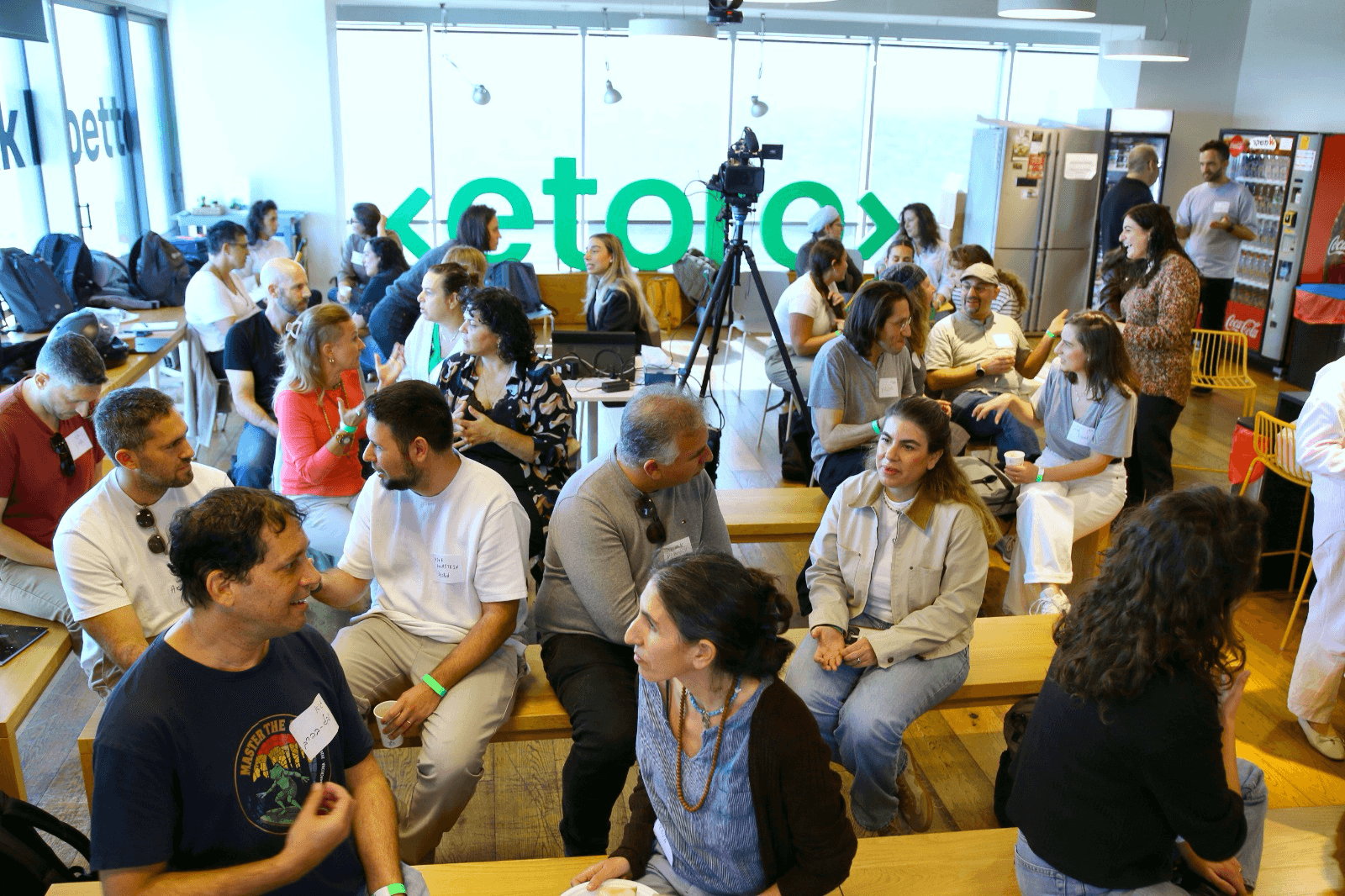
Almost every conversation we have with enablement teams lately comes back to the same question: how do you get people ready for a product that changes every week?
Reps demo a feature that shipped yesterday. CS and support answer questions nobody has written an answer for yet. Customers want to figure it out on their own, right now.
AI sped up how fast the product moves. Now it's changing how we train the people who sell it, support it, and use it. And most of us are still working out what actually works in the field.
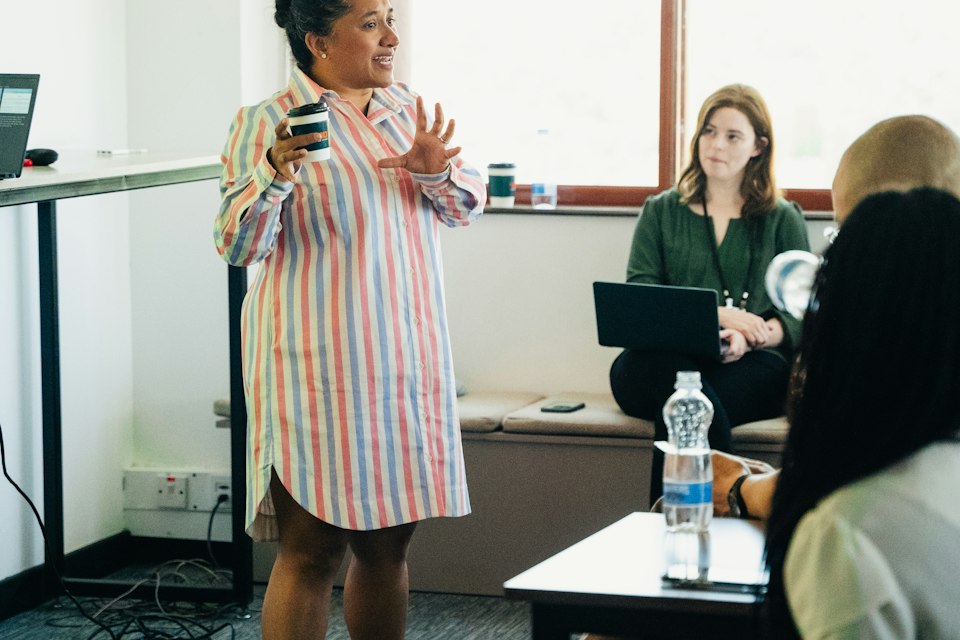
So on November 12th, around 100 people from Sales, CS and Support Enablement, Customer Education and AI Enablement packed into the eToro offices in Tel Aviv to compare notes. Five speakers shared what they tried, what worked, and what didn't.
Here's what we took home.
Prof. Gil Epstein: AI moves fast. The labor market isn't ready.
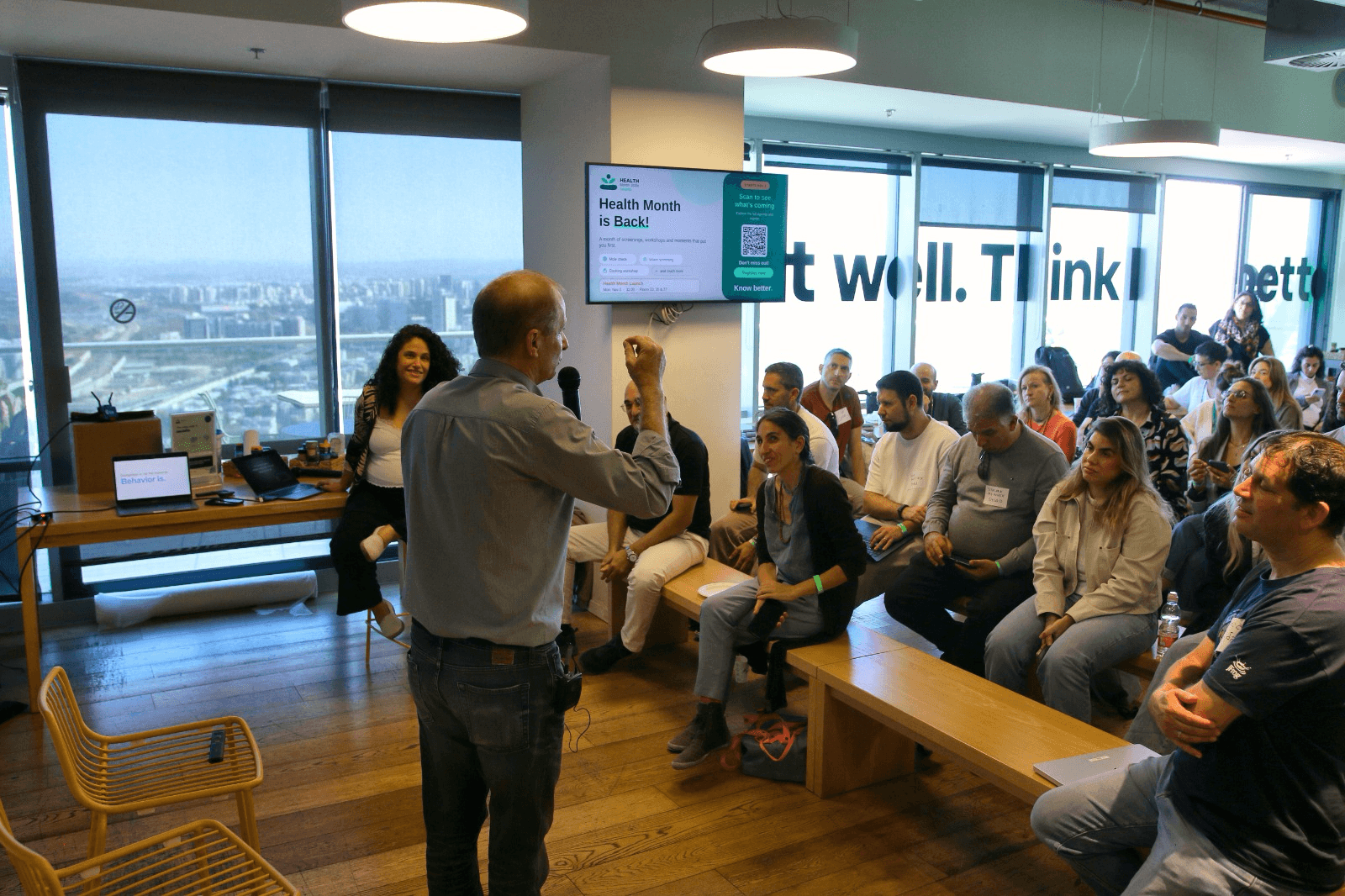
Gil, a labor economist at Bar-Ilan University and the Taub Center, opened the morning with data.
His starting point: about 17% of the work in Israel can already be done by AI alone, and the labor market isn't ready for that speed.
To use AI well, you need strong basics. And AI is eroding them.
Reading comprehension, numeracy, problem-solving, critical thinking. These are the skills that let people use AI well, and they're also the first ones we hand over to it.
He left us with two questions he thinks every company should be asking, and almost none are:
* How many people does each AI-powered process actually free up?
* What share of your new hires are still juniors?
If entry-level work keeps disappearing, who trains tomorrow's seniors?
He also described something most of the room recognized: people using AI at work without the company knowing. No process, no training, no shared way of doing it. In his words, it's like driving a Ferrari in rush-hour traffic.
Our favorite moment came almost in passing. Gil doesn't give his students slides anymore. They work through the material with AI at home, and class time is only for discussion.
The takeaway
Training can't keep teaching what AI already does by the book. It has to get people ready for what isn't in it.
Or, as Gil put it: "People want to change their lives, but they are not willing to change their routine."
Danielle Rosenfeld, Gong: The code is the only complete truth
Danielle leads engineering enablement at Gong, where teams build with AI every day and ship faster than any documentation can follow.
Confluence pages go out of date. Knowledge is spread across a dozen portals. New engineers spend weeks working out how things really work.
The code is always complete and always current. The problem is that most people can't read it.
So Gong's DevEx team built Gong KB, a kind of library on top of the codebase. The code is organized into "books" (architecture, schemas, data, infra), and anyone can ask a question in plain words.
* A PM can see which parts of the code a change touches, and which teams to bring in, before booking a single meeting.
* A new engineer can ask for the architecture and get the full path from client to data, at their level, from day one.
* When the code changes, the knowledge changes with it.
Then she showed the next step: using the Juno MCP to turn that knowledge into a full course, video included. She admitted she almost jumped up and hugged the Juno team. We'll take it.
She was also honest about the limit. The code tells you what the product does, but never why. The room clearly had engineers in it, too: the Q&A went straight into PRs and parallel branches.
The takeaway
AI doesn't replace the expert. It means you walk into that conversation prepared.
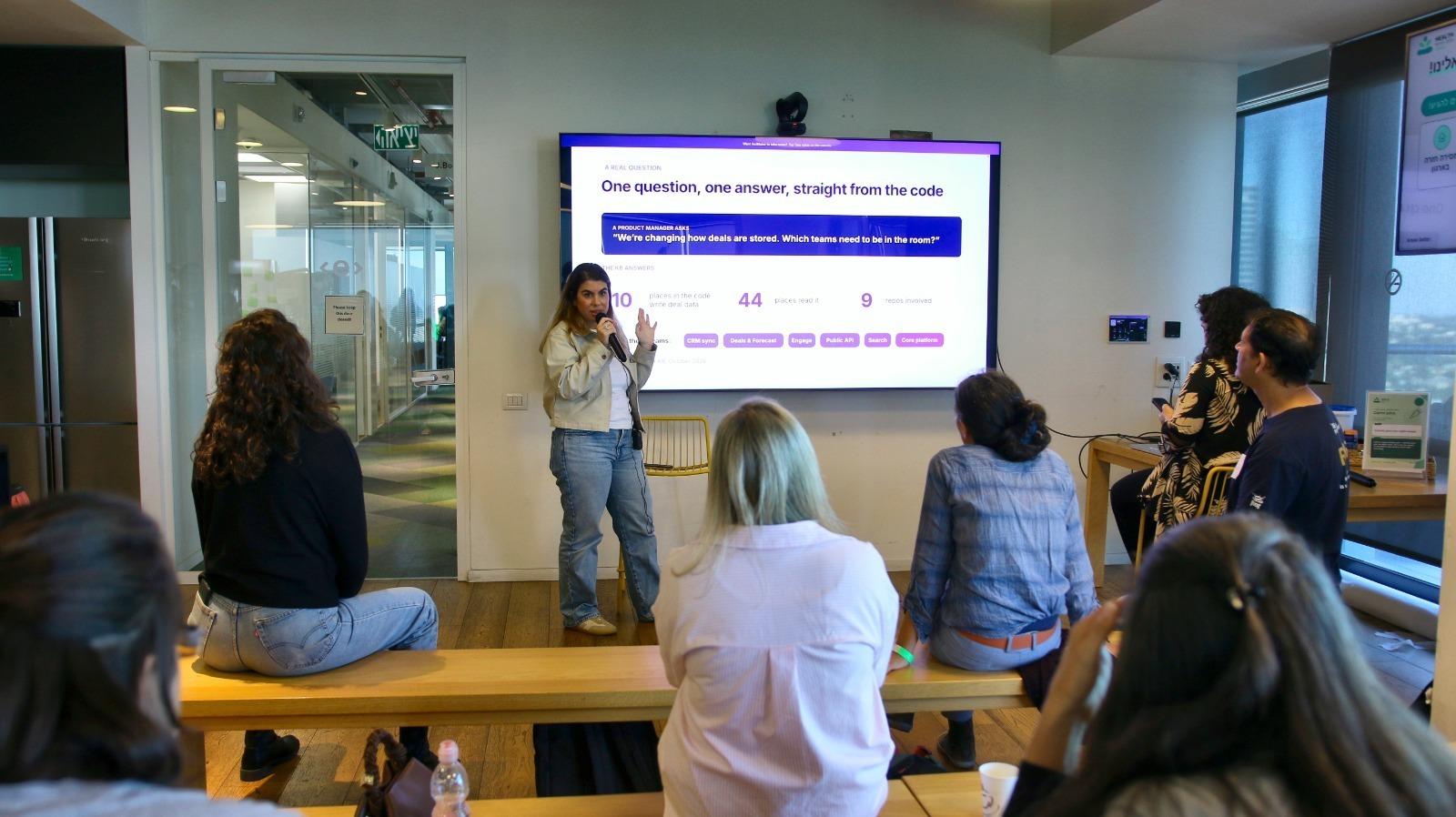
Guy Yuval-Baharav, JFrog: Don't vibe your enablement
Guy spent 20 years in R&D. Nine months ago, he moved into enablement with no instructional design background, and was still asked to raise the bar and move faster.
So he made AI a partner he learns from, not just a tool.
His agent writes the content, Juno is where it lives and reaches people, and Guy stays the human in the loop.
What he learned along the way:
* Write rules, don't vibe. Every time the AI gets something wrong, turn it into a permanent rule or skill.
* Give it a definition of done. What should the learner be able to do at the end?
* Build the checks into the AI itself, or you end up working for it.
*You're still responsible for the content, even when AI wrote it.
His favorite example got a laugh: the quiz generator kept putting the right answer in option A. Once he fixed that, it started making the right answer the longest one.
For small features, the whole flow now runs on its own. Once a week, an agent reads the product updates in Slack, builds a unit in Juno, and lets the field know. Why weekly and not instantly? Because the reps asked for less Slack noise.
Building a unit used to take him weeks. Now it takes hours.
The takeaway
What's the last mistake your AI made twice? That's your next rule.
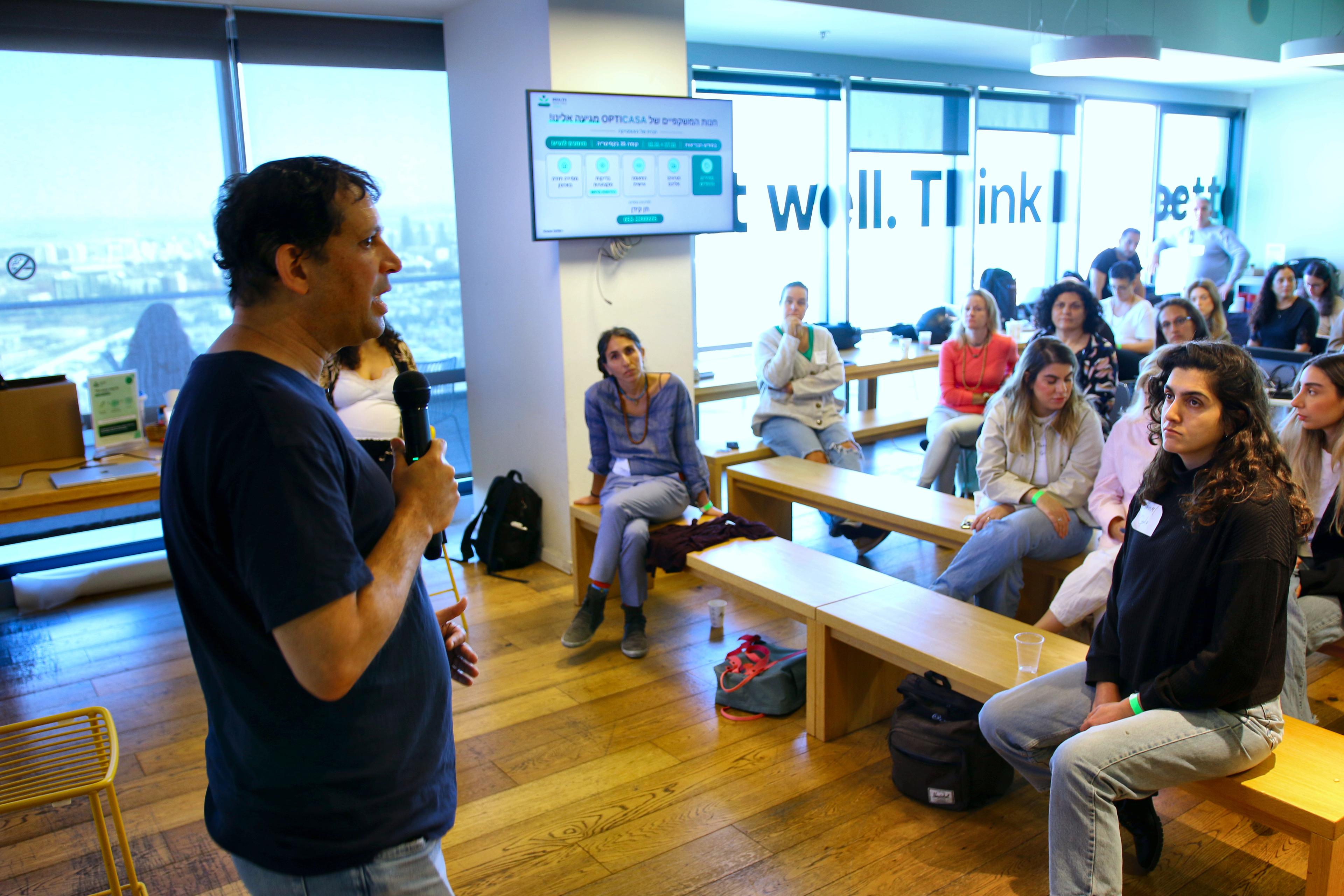
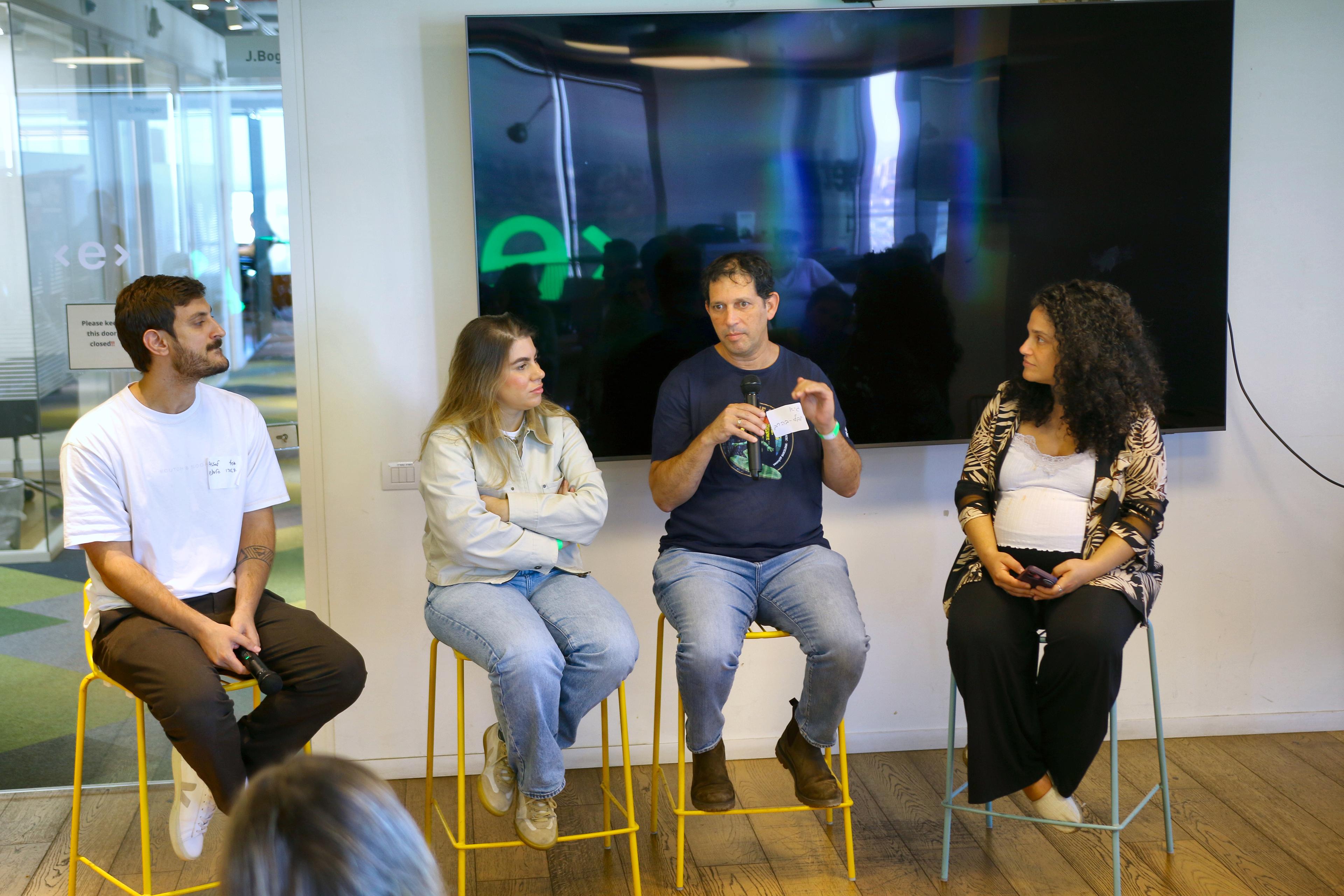
Assaf Elroy, eToro: The hardest part isn't technical
Assaf leads training and knowledge at eToro, our host for the day. On the panel, someone asked about his biggest challenge with AI adoption. He didn't mention a single tool.
He pointed at our own heads.
AI moved everyone's cheese. Companies changed strategy, managers are rethinking how they lead, and employees are working out where they fit in their own jobs. And every new tool moves the cheese again.
We love innovation that makes life easier. We just don't love the change it asks of us. Our brain reads a shift this big as a threat, so it goes straight to what we might lose.
For Assaf, seeing the opportunity is something you practice, like training a muscle, every time a new tool lands.
The takeaway
If you lead a team, the way you talk about change shapes how safe your people feel to try things. Next time a new tool arrives, ask what you gain before you ask what you lose.
Avner Baruch, Project Moneyball: Don't bring opinions. Bring evidence.
Avner started with a quick test. He asked the room what we remembered from the hour of talks before his. Most of us could name two ideas.
Then he asked us to think about our sellers. We give them 20, 60, sometimes 90 hours of training. How much do we really think sticks?
GTM teams don't need to learn more. They need to practice more.
His warning for enablement was blunt: the biggest risk isn't a bad course; it's not being able to prove it mattered. If you can't show your value, someone will call you a cost center, and cost centers get cut first.
That proof won't come from completion rates. A CRO wants to know which new hire is going to make it, where deals get stuck, and why. Ideally during onboarding, not after the first 90 days.
One idea anyone can try tomorrow: when a rep handles an objection really well, cut a 30-second clip from the call, share it with the team, and give them the credit. A few weeks later, everyone is using the same words.
The takeaway
Diagnose before you build. And if your CRO asked you tomorrow which new reps will hit their number, what would you show them?
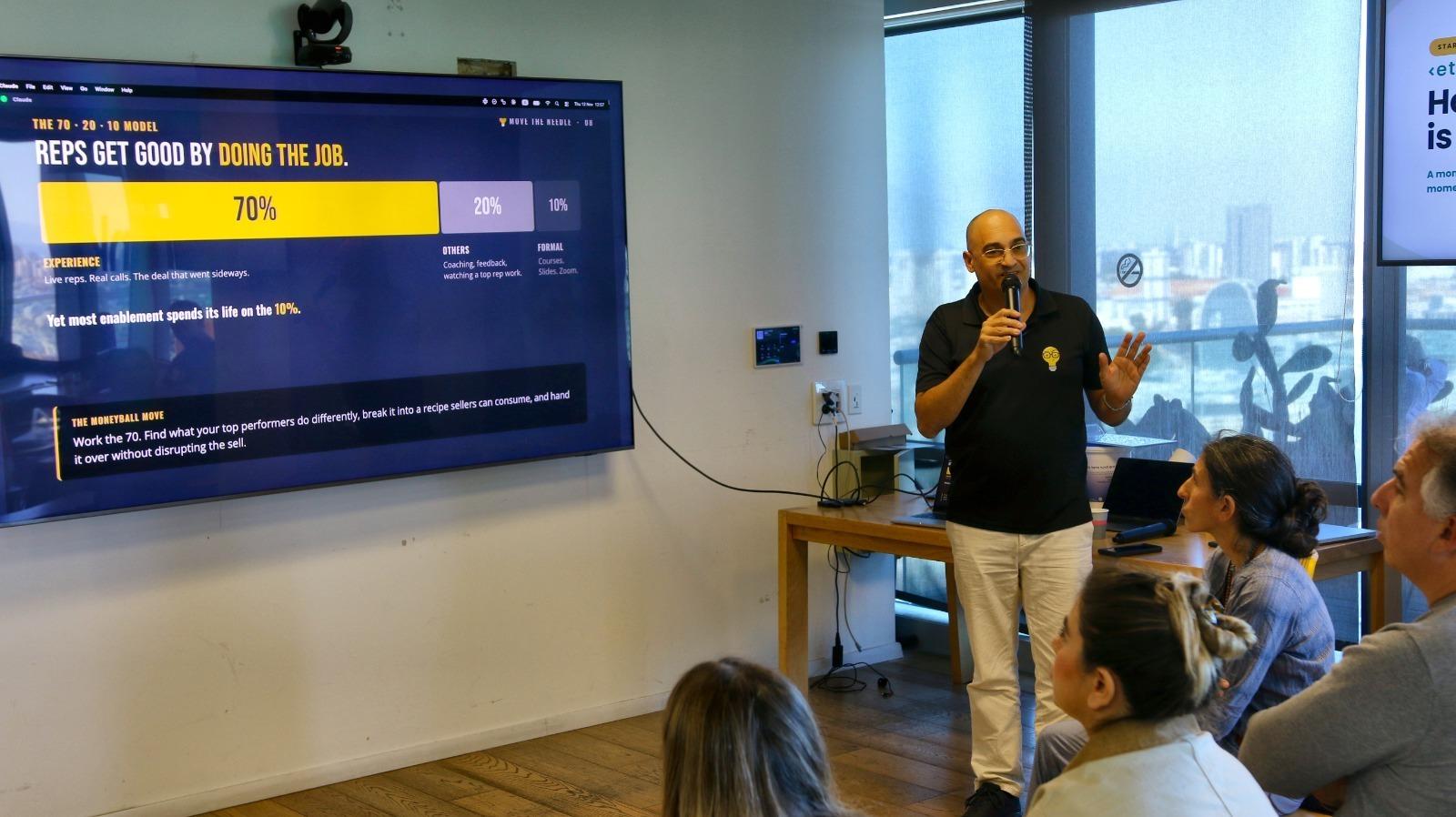
A closing word from Dor Nachshoni, Juno Journey: Learning isn't the goal. Behavior change is.
Dor, CEO and co-founder of Juno Journey, closed the morning with the question we hear from almost every enablement, L&D, and HR team: how do you measure and prove ROI?
His answer: what we're all really trying to create is behavior change.
Getting there means connecting the systems a company already has, so you can see the link between what people learned and how they actually work.
The takeaway
Completion rates tell you who finished. Behavior tells you what changed.

So, where does that leave us?
Five talks, five very different companies, and nobody asked for more content or another tool.
Gil noticed it too. After his talk, he told us the questions from the room were unusually specific. Nobody asked whether AI will replace them. People asked what to do with a team that already uses AI faster than their processes allow.
That's the conversation enablement is having right now. And honestly, the best parts of it happened between the talks: people swapping prompts at the tables and comparing what they'd tried.
Many of us are a team of one or two at work. That's why we started The Learning Table: so the people doing this work don't have to figure it out alone.
Thank you to Gil, Danielle, Guy, Assaf, and Avner for sharing real examples so generously, to Dor for closing the morning, and to eToro for opening your doors.
See you at the next one 💙